
Quality & Methods
Ensuring Purity: HPLC Verification for GLP3 Research Compounds
·Educational reference
In the rigorous landscape of peptide research, the integrity of reference compounds is paramount to the validity and reproducibility of experimental findings. High-Performance Liquid Chromatography (HPLC) stands as a foundational technique for assessing the purity and identity of these compounds. This article delves into the critical importance of HPLC verification, particularly when working with complex peptide structures such as the GLP3 research compound.
The accuracy of research hinges on the quality of its inputs. For a GLP3 research compound, variations in purity, presence of impurities, or even misidentification can lead to erroneous conclusions, wasted resources, and stalled progress. HPLC provides a robust, quantitative method to confirm that the material being used in experimental protocols aligns with its intended chemical specifications, thus safeguarding the scientific process from its foundational elements.
## What is HPLC and How Does it Apply to GLP3 Research Compounds?
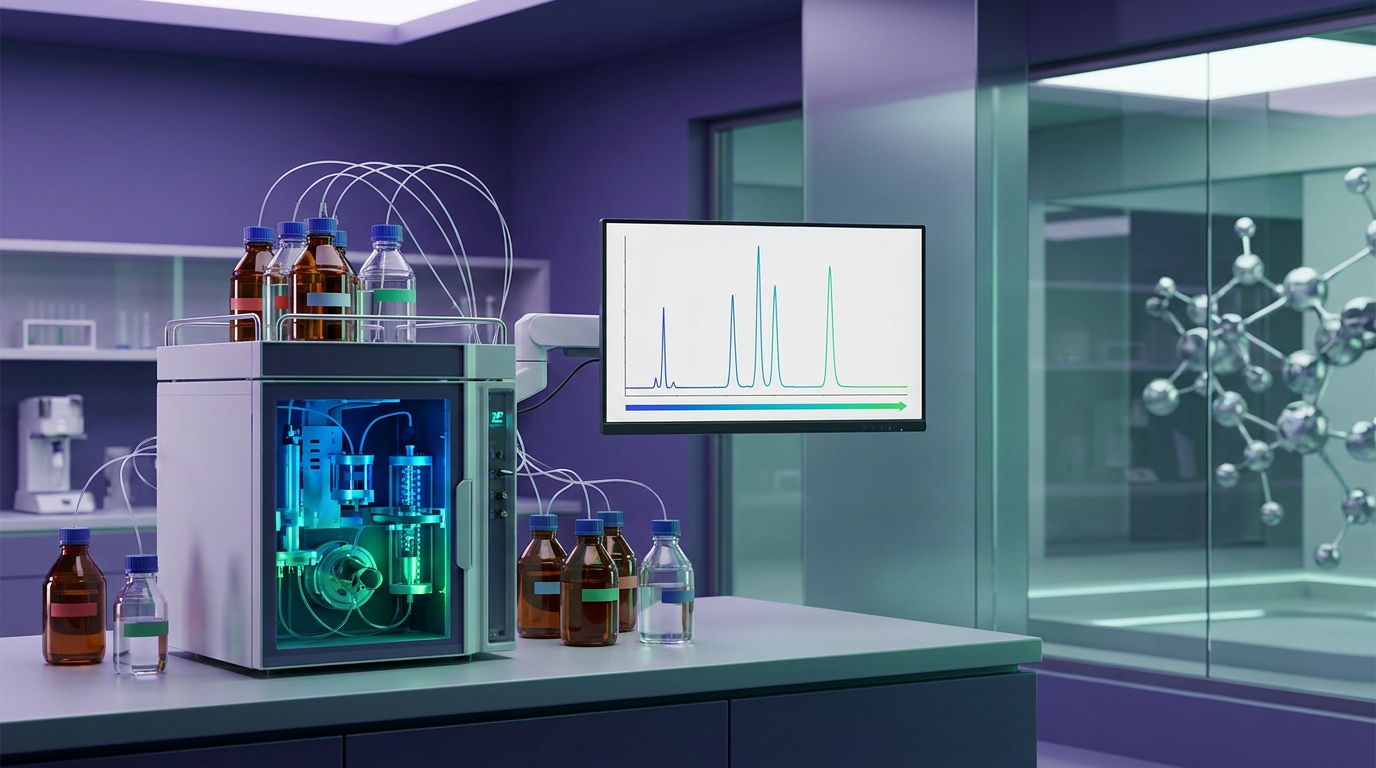
High-Performance Liquid Chromatography (HPLC) is an analytical chemistry technique used to separate, identify, and quantify each component in a mixture. It operates on the principle of differential partitioning between a stationary phase and a mobile phase. When applied to peptide research, particularly for a GLP3 research compound, HPLC allows researchers to resolve the primary peptide sequence from truncated sequences, by-products, unreacted starting materials, and other contaminants that may arise during synthesis or storage.
The process typically involves injecting a small volume of the sample into a column packed with a stationary phase (e.g., C18 silica). A liquid mobile phase then carries the sample through the column. Components in the mixture interact differently with the stationary phase based on their physicochemical properties (e.g., hydrophobicity, charge, size), causing them to elute from the column at different times. A detector, often a UV-Vis spectrophotometer or a mass spectrometer, then identifies and quantifies the separated components, providing a chromatogram that illustrates the purity profile of the sample. For a GLP3 research compound, this chromatogram is a critical fingerprint of its quality.
### Mechanism of Action: Separating Peptide Analogs
The separation mechanism in reversed-phase HPLC, commonly used for peptides, relies on hydrophobic interactions. The stationary phase is typically non-polar, while the mobile phase starts as highly polar (e.g., water with a small amount of acid) and gradually becomes less polar (e.g., increasing acetonitrile concentration). Peptide molecules, including the GLP3 research compound, interact with the stationary phase based on their hydrophobicity. More hydrophobic peptides retain longer in the column, while more polar ones elute faster.
This differential affinity is crucial because even minor changes in a peptide sequence, such as the omission of an amino acid or the presence of a protective group, can alter its hydrophobicity and thus its elution time. This allows for the precise separation of the target GLP3 research compound from closely related impurities, which might otherwise confound experimental results by exhibiting similar or antagonistic biological activity to the intended target molecule.
## What the Research Shows: The Impact of Purity on Experimental Outcomes
The scientific literature consistently underscores the necessity of high-purity research compounds. Numerous studies across various peptide research domains highlight how impurities, even at low percentages, can significantly alter experimental observations. For instance, early investigations into peptide hormone analogs frequently encountered issues where observed biological activity was mistakenly attributed to the primary peptide when, in fact, trace impurities were responsible or contributing factors (e.g., _Journal of Peptide Science_, 1990s-2000s review articles).
In studies involving the GLP3 research compound, a peptide characterized by a specific sequence and often with post-translational modifications, even seemingly minor contaminants can have profound effects. For example:
* **Altered Receptor Binding:** Impurities might bind to the same receptors as the GLP3 research compound, but with different affinities or efficacies, leading to inaccurate dose-response curves or misleading conclusions about receptor specificity. * **Off-Target Effects:** Contaminants could interact with entirely different biological targets, inducing confounding off-target effects that obscure the true mechanism of action of the GLP3 research compound. * **Reduced Potency:** The presence of inactive truncated or modified forms of the GLP3 research compound effectively dilutes the active substance, leading to an underestimation of its potency. * **Increased Variability:** Inconsistent purity between batches can introduce high variability into experimental results, making data difficult to interpret and replicate across different experimental runs or research groups.
### Documented Case Studies and Methodologies
Research published in _Analytical Biochemistry_ (early 2000s) and _Peptide Science_ (late 1990s) frequently details methodologies for isolating and characterizing highly pure peptides for biological assays. These papers often showcase chromatograms demonstrating the resolution of the target peptide from synthesis by-products and emphasize the correlation between higher purity and more consistent, interpretable biological data. For the GLP3 research compound, these principles are directly applicable, guiding the need for stringent analytical controls.
## Comparisons: HPLC vs. Other Purity Assessment Methods
While HPLC is a cornerstone, other analytical techniques contribute to comprehensive peptide characterization. Understanding their roles and limitations provides context for HPLC's critical position.
| Method | Primary Function | Strengths | Limitations | | :---------------------- | :------------------------------------------------ | :-------------------------------------------------- | :---------------------------------------------------------- | | **HPLC** | Purity assessment, quantification, separation | High resolution, quantitative, versatile detectors | Requires reference standards, can be time-consuming | | **Mass Spectrometry (MS)** | Molecular weight, sequence confirmation, post-translational modifications | High sensitivity, definitive structural identification | Not inherently quantitative for purity, requires skilled interpretation | | **Amino Acid Analysis (AAA)** | Confirmation of amino acid composition | Absolute quantification of amino acids | Destructive method, does not confirm sequence order or purity | | **Capillary Electrophoresis (CE)** | Purity assessment, charge variant separation | High efficiency, small sample volume, rapid | Limited sample capacity, may require specific buffers |
While MS provides critical information on the exact molecular mass and sequence, it does not inherently quantify the *percentage* of the main product relative to impurities in the same way HPLC does. Similarly, AAA confirms the elemental building blocks but offers no insight into sequence integrity or overall purity. Therefore, for a GLP3 research compound, a combination of HPLC (for purity and quantification) and MS (for identity and structural confirmation) is often considered the gold standard for robust characterization.
## Open Research Questions and Current Challenges
Despite its widespread use, the application of HPLC for peptide verification, especially for novel or highly modified GLP3 research compound variants, still presents ongoing challenges and open questions:
* **Trace Impurity Detection:** As synthesis techniques improve, the challenge shifts to detecting and characterizing extremely low levels of impurities that may still exert biological effects. How low can detection limits go while remaining practical for routine analysis? * **Complex Post-Translational Modifications (PTMs):** GLP3 research compounds might feature complex PTMs. How can HPLC methods be further optimized to ensure that both the main peptide and its specific PTMs are accurately resolved and quantified, and not confused with closely related analogs or degradation products? * **Method Transferability and Standardization:** Ensuring that HPLC methods developed in one laboratory are reproducible and yield comparable results in another remains a focus. This is particularly important for multicenter studies involving the GLP3 research compound. * **Automation and High-Throughput Analysis:** There's a continuous drive for more automated and high-throughput HPLC methods to rapidly verify large numbers of peptide samples without compromising accuracy. * **Correlation of Purity with Biological Activity:** While high purity is generally desired, precisely correlating impurity levels with specific changes in biological activity (especially for trace impurities) remains a complex area of investigation.
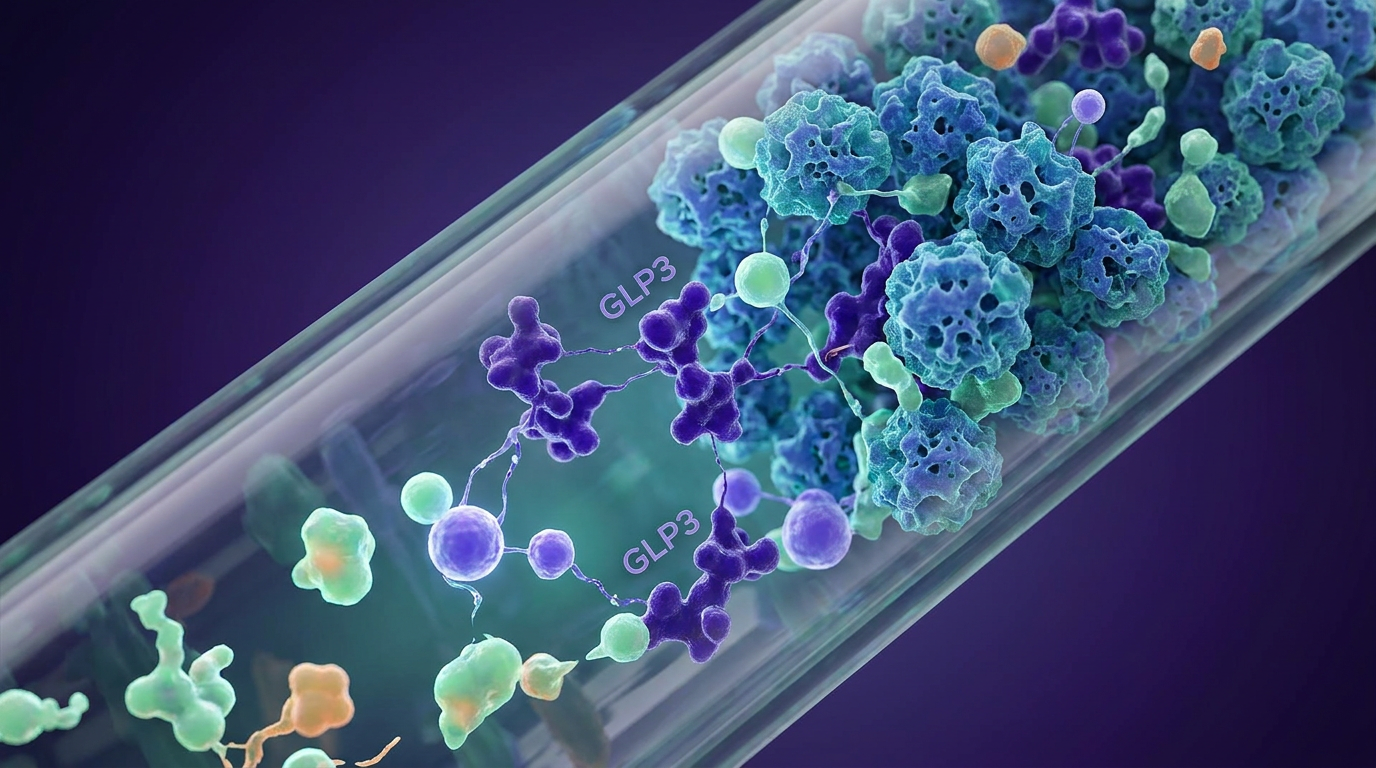
Addressing these questions requires continuous innovation in column chemistry, detector technologies, and data analysis algorithms, ensuring that HPLC remains at the forefront of peptide quality assurance for GLP3 research compounds.
## Risks and Evidence Gaps in Neglecting HPLC Verification
Neglecting proper HPLC verification for a GLP3 research compound introduces substantial risks to the scientific endeavor. The most prominent risks include:
1. **Invalidated Research Outcomes:** Conclusions drawn from experiments performed with impure GLP3 research compounds may be erroneous and irreproducible, leading to wasted resources, time, and potentially misleading the broader scientific community. 2. **Misinterpretation of Mechanisms:** If impurities are biologically active, they can confound the apparent mechanism of action, causing researchers to attribute specific effects to the GLP3 research compound when they are, in fact, caused by a contaminant. 3. **Compromised Publication Integrity:** Data derived from unverified compounds may fail peer review or be retracted if purity issues are later discovered, damaging the credibility of the research and researchers involved. 4. **Safety Concerns in Pre-clinical Models:** While not for human use, in _in-vitro_ or _in-vivo_ research models, unidentified impurities could introduce unexpected toxicities or off-target effects, complicating safety assessments and delaying progression of research. 5. **Difficulty in Reproducibility:** A lack of consistent purity across different batches or suppliers of a GLP3 research compound makes it nearly impossible for other laboratories to replicate findings, a fundamental tenet of scientific validity.
An evidence gap exists in the detailed, retrospective analysis of how often undetected impurities have led to significant errors in published peptide research. While anecdotal evidence and best practice guidelines strongly suggest it's a common problem, comprehensive meta-analyses quantifying this impact across various peptide classes, including the GLP3 research compound, are less common. Such studies would further solidify the imperative for robust analytical verification.
## Practical Laboratory Considerations for HPLC Verification of GLP3 Research Compound
Implementing effective HPLC verification for a GLP3 research compound in a laboratory setting requires careful planning and execution. Key considerations include:
* **Method Development and Optimization:** Developing an HPLC method specific for the GLP3 research compound requires optimizing parameters such as column type, mobile phase composition (solvent gradient, pH, additives), flow rate, and detection wavelength. The goal is to achieve maximal resolution of the main peak from potential impurities. * **Reference Standards:** Whenever possible, obtaining or synthesizing a highly purified reference standard of the GLP3 research compound is invaluable. This standard serves as a benchmark for retention time and peak shape, aiding in the identification and quantification of the target peptide and potential impurities in experimental samples. * **Detector Selection:** For peptide analysis, UV detection (e.g., at 214 nm for the peptide bond, or 280 nm for tryptophan/tyrosine residues) is common. Coupling HPLC with mass spectrometry (LC-MS) provides an extra layer of confidence by confirming the molecular weight and often the sequence of the separated components, which is particularly useful for identifying the GLP3 research compound and its related impurities. * **Calibration and Quantification:** Quantitative HPLC requires proper calibration using known concentrations of the GLP3 research compound. This allows for accurate determination of the percentage purity and concentration of the active peptide in a sample. * **Routine Maintenance and Quality Control:** Regular maintenance of HPLC instrumentation, including column cleaning, solvent quality checks, and system suitability tests, is essential to ensure consistent and reliable performance over time. Quality control samples should be run periodically to monitor method performance. * **Documentation:** Meticulous record-keeping of HPLC chromatograms, method parameters, and purity calculations is crucial for traceability and reproducibility of research involving the GLP3 research compound.
## FAQ Section: Understanding GLP3 Research Compound Purity
### How frequently should GLP3 research compound batches be verified by HPLC?
Each new batch or lot of a GLP3 research compound should undergo HPLC verification upon receipt and before critical experiments. If a compound is stored for extended periods or under suboptimal conditions, re-verification is advisable to check for degradation products.
### What percentage purity is generally acceptable for a GLP3 research compound in academic research?
While specific requirements can vary based on the intended application and the sensitivity of the assay, a purity of ≥95% is often considered a minimum for robust biological research involving the GLP3 research compound. For highly sensitive assays or _in-vivo_ work, purities of ≥98% or even ≥99% are often preferred to minimize confounding effects from impurities.
### Can HPLC differentiate between the GLP3 research compound and a closely related analog?
Yes, properly optimized HPLC methods, particularly reversed-phase HPLC, are highly effective at separating closely related peptide analogs. Even a single amino acid substitution or minor modification can alter a peptide's hydrophobicity sufficiently to result in a distinct retention time, allowing for differentiation of the GLP3 research compound from its structural variants.
### What do the different peaks on an HPLC chromatogram of a GLP3 research compound represent?
The largest, most prominent peak typically represents the target GLP3 research compound. Smaller peaks (referred to as impurity peaks) indicate the presence of other substances, which could be synthesis by-products, truncated sequences, oxidized forms, or other contaminants. The area under each peak is proportional to the concentration of that component, allowing for purity calculation.
### Is it possible for a GLP3 research compound to have high purity by HPLC but still contain an active impurity?
While less common at very high purity levels (e.g., >98%), it is theoretically possible. An impurity might have a very similar physicochemical profile to the GLP3 research compound, leading to co-elution or an undetectable separation. Alternatively, an impurity might be present at such a low concentration that it's below the detection limit of the HPLC method but still exhibits potent biological activity. This is why complementary techniques like LC-MS are often used to confirm the identity of the main peak and screen for highly potent, low-level contaminants.
## Conclusion: The Indispensable Role of HPLC in GLP3 Research Compound Quality
The rigorous pursuit of scientific truth demands an unwavering commitment to the quality of research materials. For complex molecules like the GLP3 research compound, High-Performance Liquid Chromatography (HPLC) verification is not merely an option but an indispensable component of sound scientific practice. It provides the empirical evidence necessary to confirm the purity and identity of the material, thereby ensuring the reliability and reproducibility of experimental results. By diligently applying HPLC, researchers safeguard against misleading data and contribute to a more robust and trustworthy body of scientific knowledge concerning the GLP3 research compound. Its role in separating, identifying, and quantifying peptide components is fundamental to advancing our understanding and mitigating the risks associated with impure reference materials.
Educational reference only — in-vitro research use only.