
Quality & Methods
A Comprehensive Peptide Purity Testing and Storage Guide for Researchers
·Educational reference
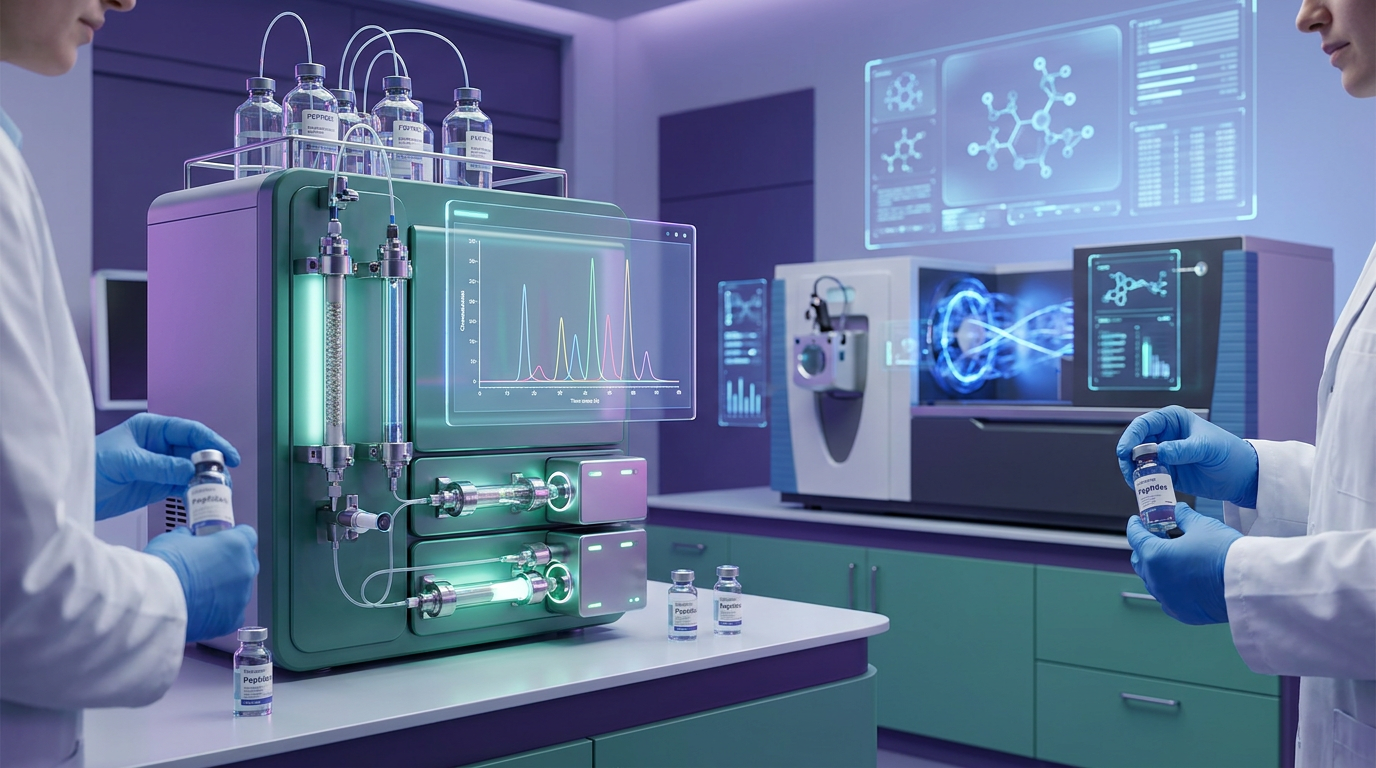
Peptide research stands at the forefront of numerous scientific disciplines, driving advancements in fundamental biology and applied sciences. The reliability and reproducibility of results in peptide-based studies hinge critically on the quality and purity of the peptide materials used. A robust **peptide storage guide** for maintaining peptide integrity is intrinsically linked to understanding purity testing methodologies. This article delves into the indispensable role of advanced analytical techniques, specifically High-Performance Liquid Chromatography (HPLC) and Mass Spectrometry (MS), in assessing peptide purity, along with the critical layer of assurance provided by third-party verification. These methods collectively form the bedrock for ensuring that research peptides meet stringent quality standards, thereby validating experimental outcomes and supporting translational research trajectories.
### What is Peptide Purity and Why Does it Matter?
Peptide purity refers to the proportion of the desired peptide sequence within a given sample, free from impurities such as truncated sequences, deletion sequences, modified peptides (e.g., oxidized, deamidated), residual solvents, counterions, and non-peptide contaminants. For research applications, even minute levels of impurities can significantly confound experimental results. For instance, truncated peptides might exhibit partial activity, act as antagonists, or simply dilute the effective concentration of the target peptide. Oxidized methionine or tryptophan residues can alter peptide conformation and biological activity. Therefore, a comprehensive **peptide storage guide** must emphasize starting with and maintaining high-purity materials.
Ensuring high purity is vital across various stages of research. In *in vitro* studies, impurities can lead to false positives, false negatives, or altered dose-response curves, making data interpretation challenging and potentially misleading. In *in vivo* research models, contaminants can elicit non-specific biological responses, toxicity, or immune reactions, thereby compromising the specificity and safety of the experimental intervention. Furthermore, regulatory guidelines for future therapeutic development emphasize stringent purity standards, making early adoption of robust quality control measures essential.
### Mechanism of Action: How Purity Testing Works
Peptide purity testing primarily relies on analytical techniques that separate components of a mixture based on distinct physical or chemical properties, followed by detection and quantification. The goal is to isolate the target peptide from any co-existing impurities and quantify its relative abundance. Different methods offer complementary insights, addressing various types of potential contaminants.
**High-Performance Liquid Chromatography (HPLC)** is the cornerstone of peptide purity analysis. This technique separates molecules based on their differential interaction with a stationary phase and a mobile phase. For peptides, reverse-phase HPLC (RP-HPLC) is predominantly used, where separation occurs based on hydrophobicity. Peptides are typically eluted from a nonpolar stationary phase (e.g., C18) by increasing the concentration of an organic solvent in the mobile phase. The detector (usually UV at 214 nm, corresponding to the peptide bond) records the elution profile as a chromatogram, with each peak representing a different component. The area under the peak corresponding to the target peptide, relative to the total area of all peaks, provides a percentage purity value. This method is highly effective for separating peptides of similar size but differing hydrophobicity, such as deletion sequences or side-chain-modified variants.
**Mass Spectrometry (MS)** provides complementary information by measuring the mass-to-charge ratio (m/z) of ions. When coupled with HPLC (LC-MS), it offers powerful capabilities for both separation and identification. For peptides, Electrospray Ionization (ESI) or Matrix-Assisted Laser Desorption/Ionization (MALDI) are common ionization techniques. MS accurately determines the molecular weight of the peptide, confirming its identity and detecting the presence of impurities with different masses. Tandem MS (MS/MS) can further fragment the peptide, providing sequence information that helps identify specific modifications or truncated sequences. MS is invaluable for identifying impurities not easily resolved by HPLC alone or for confirming the exact nature of observed impurities.
### What the Research Shows: Efficacy of Analytical Methods
Research literature consistently highlights the necessity of combining orthogonal analytical methods for comprehensive peptide characterization. Early studies, such as those by _Schwarz et al. (1995, Anal. Biochem.)_, demonstrated the utility of RP-HPLC for resolving synthetic peptide mixtures, showing that purity levels can significantly impact biological assays. The advent of LC-MS/MS brought unprecedented power. A review by _Ghazal et al. (2012, Peptides)_ underscored how LC-MS/MS offers definitive confirmation of peptide identity, sequence integrity, and identification of modifications (e.g., oxidation, deamidation, acetylation), which are critical for understanding biological function and developing a robust **peptide storage guide**.
More recent investigations, for example by _Wang et al. (2018, J. Chromatogr. A)_, have explored advanced HPLC column chemistries and MS fragmentation techniques, demonstrating improved resolution for challenging separations and enhanced sensitivity for detecting low-level impurities. These studies often compare the purity profiles obtained from different synthesis strategies or purification protocols, illustrating how analytical rigor drives process optimization. The research consistently reinforces that a certificate of analysis based solely on a single analytical method might not be sufficient for highly sensitive or complex peptide research. Multiple complementary methods are required to fully characterize the purity landscape of a peptide sample.
### Practical Laboratory Considerations: A Peptide Storage Guide
Effective peptide handling and storage are crucial to maintaining the integrity and purity established through rigorous testing. Even the purest peptide can degrade rapidly if not stored correctly, negating the efforts in synthesis and analysis. A comprehensive **peptide storage guide** should address several key areas:
* **Formulation:** Peptides are typically provided as lyophilized powders. This form offers the greatest stability, minimizing degradation reactions that occur in solution. * **Temperature:** For long-term storage, peptides should be stored at -20°C or, preferably, at -80°C. Fluctuations in temperature can induce degradation, so stable conditions are paramount. * **Moisture Exclusion:** Peptides are highly susceptible to hydrolysis and oxidation in the presence of moisture. Always store lyophilized peptides in a desiccated environment, ideally with a desiccant pack or under vacuum. Allow vials to equilibrate to room temperature *before* opening to prevent condensation. * **Light Exposure:** Protect peptides from direct light exposure, especially UV light, which can induce photo-oxidation, particularly for residues like tryptophan, tyrosine, and histidine. Amber vials or foil wrapping can mitigate this risk. * **Reconstitution:** When reconstituting, use appropriate solvents and buffers. Deionized, sterile water is often suitable, but some hydrophobic peptides may require a small amount of an organic co-solvent (e.g., acetonitrile, DMSO, DMF) to aid dissolution. Avoid multiple freeze-thaw cycles of reconstituted peptides; aliquot and store at -20°C or -80°C. * **Solution Stability:** The stability of peptides in solution is highly dependent on pH, temperature, and buffer composition. Generally, peptides are most stable at a neutral to slightly acidic pH (pH 5-7). High pH can lead to racemization and deamidation, while very low pH can cause acid-catalyzed hydrolysis. Refer to specific peptide literature or manufacturer recommendations for optimal solution stability conditions.
By diligently following these guidelines, researchers can significantly extend the shelf life and maintain the purity of their peptide samples, ensuring the reliability of their experimental work.
### Comparison of Purity Methods
| Feature | RP-HPLC | Mass Spectrometry (MS) | LC-MS/MS | | :-------------------- | :------------------------------------------------ | :---------------------------------------------------- | :--------------------------------------------------- | | **Separation Principle** | Hydrophobicity | Mass-to-charge ratio | Hydrophobicity + Mass-to-charge ratio | | **Primary Output** | Chromatogram, % purity by peak area | Mass spectrum, molecular weight confirmation | Chromatogram + Mass spectrum, sequence validation | | **Impurity Detection**| Truncations, deletions, side-chain modifications | Different MW species (oxidized, deamidated, adducts) | Comprehensive identification of known/unknown impurities | | **Quantification** | Excellent for relative purity | Semi-quantitative, best for identification | Semi-quantitative, excellent for complex mixtures | | **Strengths** | High resolution, widely available, quantitative | Definitive mass confirmation, modification detection | Unambiguous identification, high sensitivity | | **Limitations** | Cannot identify specific impurities without MS | Poor for isobaric impurities or non-peptide contaminants | Requires expertise, higher cost | | **Best Use** | Primary purity assessment, batch consistency | Identity confirmation, initial impurity screening | Comprehensive characterization, unknown impurity identification |
### The Role of Third-Party Verification
Third-party verification involves engaging an independent analytical laboratory to confirm the purity and identity of peptide samples. This adds an invaluable layer of objectivity and assurance. Researchers often utilize this service when purchasing peptides from suppliers, particularly for critical experiments or when seeking to validate internal quality control data. The benefits include:

* **Unbiased Assessment:** An independent lab has no vested interest in the peptide's reported purity, offering an objective second opinion. * **Specialized Expertise:** Third-party labs often possess highly specialized equipment and experienced personnel dedicated to peptide analysis, which may exceed the capabilities of individual research labs. * **Increased Confidence:** Independent verification bolsters confidence in experimental data, enhancing the credibility and publishability of research findings. This is particularly relevant when working with novel peptides or those exhibiting unexpected biological activity. * **Supplier Accountability:** It provides a mechanism to verify supplier claims, fostering transparency and accountability within the peptide supply chain. This is crucial for maintaining a high standard in any **peptide storage guide**.
When opting for third-party verification, it is important to ensure the chosen laboratory uses validated methods (e.g., cGMP-compliant where applicable) and provides detailed reports, including raw data alongside the summarized results. This robust approach to quality control significantly mitigates the risks associated with peptide impurities.
### Open Research Questions and Evidence Gaps
Despite the sophistication of current analytical methods, several open research questions and evidence gaps persist in peptide purity analysis:
1. **Detection of Low-Level, Biologically Potent Impurities:** Current methods are excellent for high-purity peptides, but detecting and characterizing very low levels (e.g., <0.1%) of impurities that may still exert significant biological effects remains challenging. Are there novel detection technologies capable of ultra-trace impurity analysis? 2. **Chiral Purity Assessment:** Racemization (conversion of an L-amino acid to a D-amino acid) can occur during peptide synthesis and significantly alter biological activity. While specific methods exist (e.g., chiral HPLC, GC-MS after derivatization), routine and rapid chiral purity assessment is not universally integrated into standard peptide QC workflows. 3. **Comprehensive Post-Translational Modification (PTM) Mimicry:** Many research peptides aim to mimic endogenous peptides with complex PTMs. Ensuring the correct modification at the correct site, free from unintended modifications, is a continuous analytical challenge. 4. **Stability-Indicating Methods:** Developing rapid, high-throughput analytical methods that are truly stability-indicating (i.e., capable of detecting all potential degradation products) for a wide range of peptide sequences is an ongoing area of research. This directly impacts the efficacy of any **peptide storage guide**. 5. **Standardization Across Laboratories:** While general guidelines exist, detailed standardization of analytical workflows for peptide purity across different research and commercial laboratories could enhance comparability and reproducibility of results globally.
Addressing these gaps will further refine peptide quality control, improving the foundational integrity of peptide-based research.
### Risks and Evidence Gaps Associated with Peptide Purity
The primary risk associated with insufficient peptide purity is the generation of irreproducible or misleading scientific data. This can lead to wasted resources, incorrect conclusions, and a delay in scientific progress. Specific risks include:
* **Misinterpretation of Biological Activity:** An impure peptide might show reduced or altered biological activity, leading researchers to incorrectly conclude the peptide is inactive or has different potency than it truly possesses. Conversely, a contaminant might be biologically active, leading to false positive results attributed to the target peptide. * **Toxicity:** Impurities, particularly residual synthesis reagents or by-products, can exhibit cytotoxicity or immunogenicity in *in vitro* or *in vivo* models, confounding observations of the target peptide's effects. * **Batch-to-Batch Variability:** Inconsistencies in purity between different batches of the same peptide can lead to significant experimental variability, making it difficult to compare results over time or between different studies. * **Financial and Time Costs:** Repeating experiments due to unreliable peptide quality incurs substantial financial and time costs, hindering research timelines.
Evidence gaps exist in the routine assessment of the biological impact of specific low-level impurities. While analytical methods can detect impurities, linking their precise biological effect at trace levels requires further systematic investigation. Furthermore, there's a need for more widely available, highly sensitive bioassays to complement physiochemical purity assessments, especially for peptides with highly specific receptor interactions.
### Frequently Asked Questions
#### ### What is the typical purity required for research peptides?
For most *in vitro* applications, 95% purity is often considered acceptable. However, for sensitive assays, receptor binding studies, or *in vivo* research models, 98% or even 99% purity may be essential to ensure reliable and specific results. The required purity level depends heavily on the specific experimental context and the desired stringency of the study. Consult the literature for similar studies or perform pilot experiments to determine the minimal acceptable purity for your specific research.
#### ### Can I trust the purity stated on a Certificate of Analysis (CoA)?
A Certificate of Analysis (CoA) is a crucial document, but its reliability depends on the rigor of the testing performed. A comprehensive CoA should include data from multiple analytical methods (e.g., RP-HPLC chromatogram with integration, MS data showing molecular weight confirmation). It is advisable to evaluate the quality of the provided data and consider independent third-party verification for critical experiments or when purchasing from less established suppliers. Always cross-reference the CoA with best practices outlined in any good **peptide storage guide**.
#### ### How often should I re-verify peptide purity during storage?
For lyophilized peptides stored under optimal conditions (-20°C or -80°C, desiccated), re-verification of purity may not be necessary for several months to a few years, depending on the peptide sequence and inherent stability. However, for peptides in solution, especially those subjected to freeze-thaw cycles or prolonged storage at higher temperatures, periodic re-verification (e.g., every 1-3 months) using HPLC is highly recommended to monitor degradation. A prudent **peptide storage guide** advises re-testing if any change in performance is observed.
#### ### What are common signs of peptide degradation?
Common signs of peptide degradation can include a decrease in biological activity, changes in solubility, or visual alterations in the lyophilized powder (though often degradation is not visually apparent). Analytically, degradation is detected by the appearance of new peaks or changes in the retention time of existing peaks in an HPLC chromatogram, or the appearance of new mass signals in an MS spectrum, indicating truncated, oxidized, deamidated, or aggregated forms of the peptide. Such observations would indicate a need to review your **peptide storage guide** practices.
#### ### Is there a difference between analytical purity and biological purity?