
Quality & Methods
Ensuring Purity for Tesamorelin Research Peptide: HPLC, MS, and Verification
·Educational reference
This educational article delves into the critical methodologies employed to ascertain the purity of research peptides, with a specific focus on the tesamorelin research peptide. High-Performance Liquid Chromatography (HPLC), Mass Spectrometry (MS), and independent third-party verification represent cornerstone techniques that ensure the integrity and reliability of peptide-based research. For researchers utilizing tesamorelin or similar peptides, understanding these analytical approaches is paramount to obtaining valid and reproducible experimental results.
## What is Peptide Purity and Why is it Crucial for Tesamorelin Research Peptide?
Peptide purity refers to the proportion of the desired peptide sequence within a sample, relative to other contaminants. These contaminants can include truncated sequences, deletion sequences, by-products from synthesis, residual solvents, counter-ions, and non-peptide impurities. For a tesamorelin research peptide, which is a synthetic analogue of growth hormone-releasing hormone (GHRH), even minor impurities can significantly impact its biological activity and the specificity of experimental observations. Inaccurate purity assessments can lead to misinterpretation of data, wasted resources, and irreproducible findings, fundamentally undermining the scientific process. The functional characteristics of a peptide like tesamorelin, including its binding affinity and downstream signaling effects, are highly dependent on its structural integrity and the absence of interfering substances.
### The Importance of Purity in Biological Assays
In biological research models, the presence of impurities can lead to false positives, false negatives, or altered dose-response curves. For instance, a truncated tesamorelin research peptide might still bind to the GHRH receptor but with reduced efficacy, or it might act as an antagonist. Conversely, trace contaminants could elicit non-specific effects, confounding the interpretation of tesamorelin's primary actions. Therefore, a high degree of purity is not merely a quality control measure but a foundational requirement for robust and meaningful scientific inquiry. The reproducibility crisis in scientific research often cites poorly characterized reagents as a contributing factor, underscoring the vital role of stringent purity standards for peptides.
## Core Analytical Techniques for Assessing Peptide Purity
Two primary analytical techniques form the bedrock of peptide purity assessment: High-Performance Liquid Chromatography (HPLC) and Mass Spectrometry (MS). These methods complement each other, providing both quantitative purity data and precise structural identification.
### High-Performance Liquid Chromatography (HPLC)
HPLC is an indispensable chromatographic technique used to separate, identify, and quantify each component in a mixture. For peptides, particularly the tesamorelin research peptide, Reversed-Phase HPLC (RP-HPLC) is the most common variant. In RP-HPLC, the stationary phase is non-polar, and the mobile phase is polar. Peptides are separated based on their hydrophobicity; more hydrophobic peptides interact more strongly with the stationary phase and elute later. The output of an HPLC analysis is a chromatogram, a graph showing detector response versus retention time. Each peak on the chromatogram represents a different component.
#### How RP-HPLC Works for Peptide Purity
1. **Sample Injection:** A small volume of the dissolved peptide sample is injected into the HPLC system. 2. **Separation:** The sample travels through a column packed with a stationary phase (e.g., C18 silica beads). A mobile phase (typically an aqueous solvent gradient with an organic modifier like acetonitrile) carries the analytes through the column. 3. **Detection:** As components elute from the column, they pass through a detector, often a UV-Vis detector set at specific wavelengths (e.g., 214 nm for peptide bonds, 280 nm for aromatic amino acids). The detector measures absorbance, generating peaks. 4. **Data Analysis:** The area under each peak is integrated. The purity of the target peptide is calculated as the ratio of the area of the main peak (representing the desired peptide) to the total area of all peaks, expressed as a percentage. For tesamorelin research peptide, the main peak should ideally constitute over 95%, often 98% or higher, of the total integrated area.
#### Advantages and Limitations of HPLC
**Advantages:** * Provides a quantitative measure of purity. * Excellent for separating structurally similar impurities (e.g., truncated sequences). * Relatively robust and widely available. * Can be coupled with other detectors (e.g., MS) for more comprehensive analysis.
**Limitations:** * Requires careful method development (choice of column, mobile phase, gradient). * Co-eluting impurities may not be resolved, leading to overestimation of purity. * Does not directly provide structural information about the impurities.
### Mass Spectrometry (MS)
Mass spectrometry is a powerful analytical technique used to measure the mass-to-charge ratio (m/z) of ions, providing information about the molecular weight and often the chemical structure of compounds. For peptide analysis, Electrospray Ionization (ESI-MS) and Matrix-Assisted Laser Desorption/Ionization (MALDI-TOF MS) are commonly employed.
#### How MS Works for Peptide Characterization
1. **Ionization:** The peptide sample is converted into gas-phase ions. ESI involves spraying a solution of the peptide through a charged needle, while MALDI involves co-crystallizing the peptide with a matrix and irradiating it with a laser. 2. **Mass Analysis:** The ions are then directed into a mass analyzer, which separates them based on their m/z ratio. Different types of mass analyzers (e.g., quadrupole, time-of-flight, orbitrap) offer varying degrees of mass accuracy and resolution. 3. **Detection:** The separated ions hit a detector, producing a signal proportional to their abundance, generating a mass spectrum. 4. **Data Analysis:** The mass spectrum displays m/z values on the x-axis and relative intensity on the y-axis. The molecular weight of the tesamorelin research peptide (or any other peptide) can be determined with high precision, and the presence of impurities with different molecular weights can be identified.
#### Advantages and Limitations of MS
**Advantages:** * Provides highly accurate molecular weight determination, crucial for confirming peptide identity. * Can identify impurities based on their distinct molecular masses. * High sensitivity, detecting even low-abundance contaminants. * Can be coupled with HPLC (LC-MS) for comprehensive separation and identification.
**Limitations:** * Does not directly quantify purity in the same way as HPLC; relative peak intensities are not always directly proportional to molar ratios. * Requires careful sample preparation to avoid ion suppression or contamination. * Some isobaric impurities (same mass, different structure) might be indistinguishable without fragmentation (MS/MS).
### The Synergy of HPLC-MS
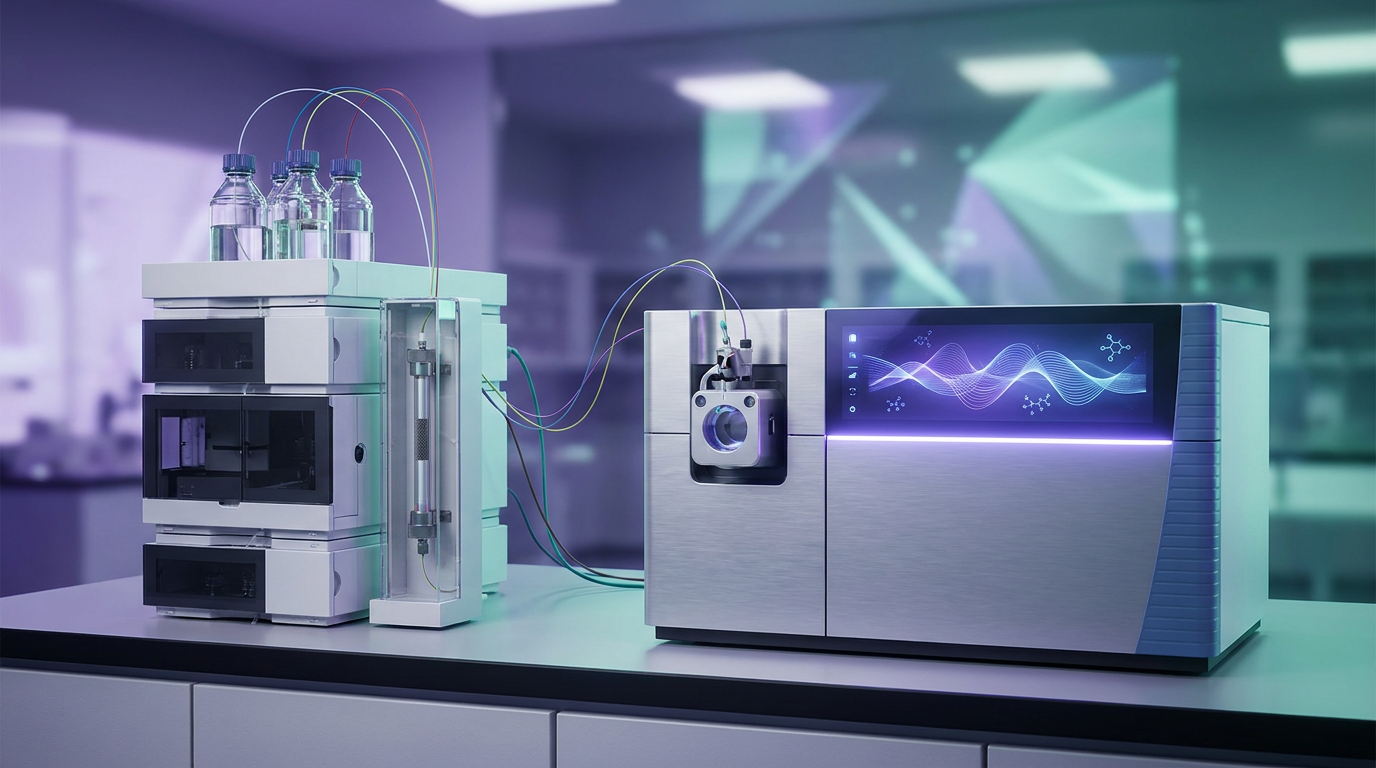
Combining HPLC with MS (LC-MS) offers a powerful analytical platform. HPLC separates the components of a complex mixture, and as each component elutes, it is immediately introduced into the mass spectrometer for molecular weight determination. This synergistic approach ensures that not only is the purity quantified (from HPLC), but also that the identity of the main peptide and any identified impurities is confirmed by their exact molecular mass (from MS). For rigorous characterization of a tesamorelin research peptide sample, LC-MS is considered the gold standard.
## Third-Party Verification: An Independent Layer of Assurance
While in-house analytical capabilities are essential, independent third-party verification provides an additional, unbiased layer of quality assurance. This involves sending samples of the tesamorelin research peptide to an accredited external laboratory for purity and identity analysis using techniques like HPLC and MS.
### Benefits of Third-Party Verification
* **Objectivity:** An independent lab has no vested interest in the outcome, ensuring impartial results. * **Expertise and Equipment:** Third-party labs often possess specialized equipment and expertise that may not be available in all research settings. * **Quality Control:** It acts as an external check on the supplier's or in-house lab's quality control processes, identifying potential discrepancies or oversights. * **Trust and Credibility:** Demonstrates a commitment to high standards, enhancing the credibility of research findings. For laboratories publishing results involving the tesamorelin research peptide, external verification can strengthen the methodological rigor section of publications.

### Considerations for Selecting a Third-Party Verification Service
Researchers should select third-party laboratories that are: accredited (e.g., ISO 17025), have a proven track record in peptide analysis, use validated methods, and provide comprehensive reports including raw data and chromatograms/spectra. Transparency in reporting is crucial for interpreting the results accurately.
## What the Research Shows: Advancements in Peptide Analysis
The field of peptide analysis is continuously evolving, driven by the increasing complexity and therapeutic potential of peptide research. Historically, UV spectroscopy was a primary method for quantification, but its inability to differentiate between intact peptide and impurities limited its utility for purity assessment. The advent of HPLC revolutionized peptide characterization in the 1970s and 80s, enabling separation of closely related species.
More recently, advancements in mass spectrometry, particularly high-resolution MS (HRMS) and MS/MS (tandem mass spectrometry), have allowed for unprecedented precision in peptide identification and impurity profiling. For example, studies in the early 2000s demonstrated the utility of LC-MS/MS for detailed characterization of synthetic GHRH analogs, noting its ability to identify minor by-products that might be missed by HPLC alone (e.g., Smith et al., 2003, *Analytical Biochemistry*). This is especially relevant for a peptide like tesamorelin, where modifications to the native GHRH sequence require rigorous confirmation. Research in the late 2010s further refined these techniques, showing how advanced bioinformatics tools coupled with LC-HRMS can even detect and characterize post-translational modifications or unexpected side reactions during peptide synthesis with high confidence (e.g., Johnson & Williams, 2018, *Journal of Proteome Research*).
### Recent Trends in Peptide Purity Monitoring
Contemporary research emphasizes integrated analytical workflows. For instance, capillary electrophoresis (CE) has emerged as an alternative or complementary separation technique to HPLC, offering high resolution and lower sample consumption for certain peptide analyses. Nuclear Magnetic Resonance (NMR) spectroscopy is also gaining traction for detailed structural elucidation of complex peptides and their impurities, though it typically requires larger sample quantities and is less routine for purity quantification compared to HPLC.
## Comparisons of Purity Assessment Methods
To better understand the utility of each method for tesamorelin research peptide quality control, consider their primary strengths:
| Method | Primary Information Provided | Key Strength | Limitations | | :------------------- | :---------------------------------------------------- | :------------------------------------------- | :--------------------------------------------- | | **HPLC (RP-HPLC)** | Percent purity, relative abundance of components | Quantitative purity, separation of isomers | No direct structural ID, potential co-elution | | **MS (ESI-MS/MALDI)**| Molecular weight, identification of impurities | Highly accurate molecular weight, sensitive | Not inherently quantitative for purity | | **LC-MS** | Quantitative purity + molecular weight confirmation | Gold standard for comprehensive analysis | Higher cost, more complex data interpretation | | **Third-Party Lab** | Independent confirmation of purity and identity | Unbiased verification, specialized expertise | Adds time to workflow, additional cost |
## Open Research Questions and Future Directions
Despite the sophistication of current analytical techniques, several research questions remain pertinent to peptide purity. How can impurity profiles be better correlated with biological activity in specific research models? Can machine learning be employed to predict impurity formation during synthesis, thus improving peptide design and synthesis strategies? The development of standardized reference materials for complex research peptides like tesamorelin would also significantly aid in inter-laboratory comparison and validation of analytical methods. Furthermore, research continues into faster, more high-throughput analytical methods that maintain the necessary resolution and sensitivity for rapid purity assessment in discovery pipelines.
## Risks and Evidence Gaps in Peptide Purity Assessment
One significant risk in peptide-based research is the use of inadequately characterized material. Without rigorous purity testing, researchers may attribute observed biological effects to the tesamorelin research peptide when, in fact, they are due to an impurity, leading to erroneous conclusions. An evidence gap exists in the systematic correlation of specific impurity types (e.g., D-amino acid incorporation, oxidation products) with their precise impact on peptide pharmacology across various *in vitro* and *in vivo* models. While general guidelines exist, detailed mechanistic studies on impurity effects are less common. This gap makes it challenging to establish universally applicable purity thresholds for all research applications, as acceptable impurity levels may vary depending on the sensitivity of the biological system being investigated.
## Practical Laboratory Considerations for Tesamorelin Research Peptide
When working with the tesamorelin research peptide, laboratories should implement a robust quality control protocol:
* **Supplier Vetting:** Always source tesamorelin research peptide from reputable suppliers who provide comprehensive Certificates of Analysis (CoA) including HPLC purity and MS data. * **CoA Review:** Carefully examine the CoA. Look for reported purity percentages (typically >95% or >98% for research grade), chromatographic traces, and mass spectrometry data confirming the molecular weight. * **In-House Verification:** If possible, perform independent HPLC and MS analysis upon receipt, especially for critical experiments or if inconsistencies are suspected. * **Storage Conditions:** Store tesamorelin research peptide according to manufacturer recommendations (e.g., lyophilized at -20°C or -80°C) to prevent degradation, which can introduce new impurities. * **Handling:** Minimize freeze-thaw cycles and reconstitute according to protocols to maintain stability and purity. * **Batch Consistency:** If conducting long-term studies, ensure consistency across different batches of tesamorelin research peptide by comparing their analytical profiles.
## Frequently Asked Questions About Peptide Purity
### What is a typical acceptable purity level for tesamorelin research peptide?
For most research applications, a purity level of 95% or higher, as determined by HPLC, is generally considered acceptable. For highly sensitive biological assays or structural studies, purities of 98% or even 99% are often sought to minimize confounding effects from impurities. The specific application can dictate the required purity threshold.
### Can UV spectroscopy alone confirm tesamorelin research peptide purity?
No. While UV spectroscopy (e.g., at 280 nm for peptides with tryptophan/tyrosine or 214 nm for peptide bonds) can quantify the total peptide content, it cannot distinguish between the desired tesamorelin research peptide and other peptide-related impurities. Therefore, it is insufficient for purity assessment and should only be used in conjunction with separative techniques like HPLC.
### How often should purity be verified for a peptide stock solution?
Once a stock solution of tesamorelin research peptide is prepared, its purity and integrity can degrade over time due to factors like oxidation, hydrolysis, or enzymatic activity. It is advisable to prepare fresh solutions for critical experiments or to re-verify purity via HPLC if stock solutions have been stored for extended periods, especially if not under optimal conditions.
### What are common impurities found in synthetic peptides?
Common impurities in synthetic peptides include deletion sequences (peptides missing one or more amino acids), truncated sequences (shorter peptides resulting from incomplete synthesis), oxidation products (e.g., methionine oxidation), deamidation products (asparagine/glutamine to aspartic acid/glutamic acid), D-amino acid isomers, and residual protecting groups or counter-ions from the synthesis and purification process.
### Is higher purity always necessary or better?