
Quality & Methods
Optimizing Reconstitution and Storage for Peptide Purity Testing
·Educational reference
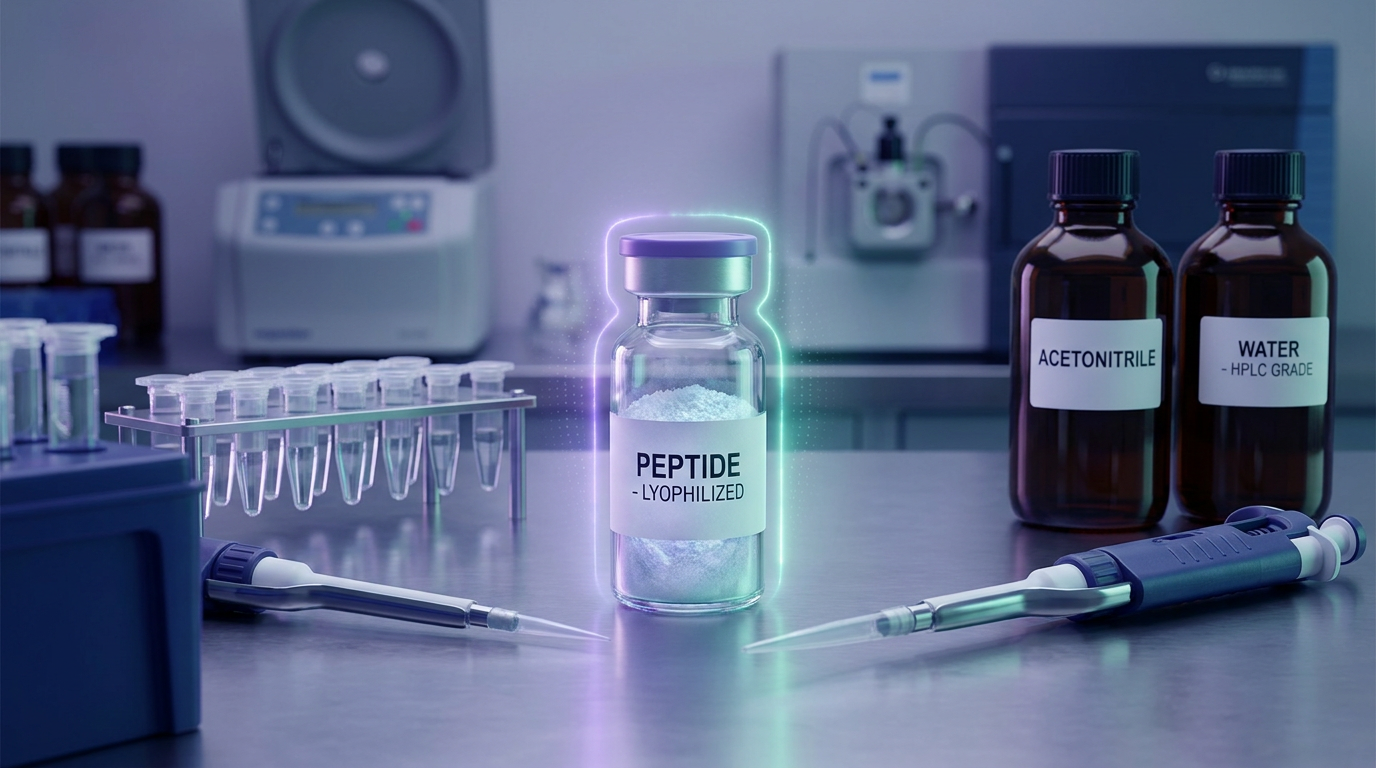
Peptides represent a class of molecules under extensive investigation across diverse fields of biochemical and biomedical research. Their utility often hinges on maintaining structural integrity and biological activity, which necessitates careful handling, particularly during reconstitution and storage from their lyophilized state. The quality of experimental outcomes directly correlates with the quality of the peptide samples used. Therefore, understanding and implementing meticulous protocols for managing these sensitive compounds is paramount. This guide provides an evidence-based overview of optimal practices for handling lyophilized research peptides, emphasizing techniques that preserve their physicochemical characteristics and ensure reliable peptide purity testing.
### Summary of Key Recommendations
* **Initial Inspection:** Always visually inspect lyophilized peptide vials for integrity and consistent appearance before use. * **Temperature Control:** Maintain peptides at ultra-low temperatures (-20°C to -80°C) during storage, and minimize freeze-thaw cycles. * **Solvent Selection:** Carefully choose reconstitution solvents based on peptide properties (hydrophobicity, charge) and downstream application compatibility. * **Concentration & Aliquoting:** Reconstitute to an appropriate stock concentration and aliquot immediately to prevent degradation from repeated access. * **pH Management:** Monitor and adjust pH if necessary to maintain peptide stability, especially for sensitive sequences. * **Sterility:** Employ aseptic techniques during reconstitution to prevent microbial contamination, particularly for *in vitro* and cell culture applications. * **Documentation:** Maintain detailed records of reconstitution, storage conditions, and any peptide purity testing performed.
## Understanding Lyophilized Peptides
Lyophilization, or freeze-drying, is a process used to preserve peptides by removing water through sublimation, resulting in a stable, solid powder. This process significantly extends shelf life by minimizing hydrolytic degradation and microbial growth, which are prevalent in aqueous solutions. However, the lyophilization process itself, and subsequent storage, can impact peptide integrity if not carefully controlled. The physical form of a lyophilized peptide—a fluffy powder, a thin cake, or a crystalline solid—can vary depending on the peptide sequence, counter-ion, and excipients used during the freeze-drying cycle. Regardless of its appearance, the primary goal of lyophilization is to render the peptide stable for shipping and long-term storage until reconstitution is required for experimental use. Proper handling upon receipt, including prompt storage at recommended temperatures, is the first step in ensuring the integrity required for accurate peptide purity testing.
## Mechanism of Action: Degradation Pathways in Peptides
Peptides, being chains of amino acids linked by amide bonds, are susceptible to various degradation pathways. Understanding these mechanisms is crucial for implementing effective storage and reconstitution strategies that preserve their chemical and structural integrity. The primary degradation pathways include hydrolysis, oxidation, deamidation, racemization, and aggregation.
**Hydrolysis** is the cleavage of the peptide bond, often catalyzed by water, acids, or bases. This can occur slowly in lyophilized peptides if residual moisture is present but accelerates significantly upon reconstitution in aqueous solutions, especially at extreme pH values. The rate of hydrolysis is influenced by temperature and the specific amino acid sequence.
**Oxidation** primarily affects methionine, cysteine, tryptophan, and tyrosine residues. Methionine can be oxidized to methionine sulfoxide, and cysteine can form disulfide bridges or be oxidized to sulfenic, sulfinic, or sulfonic acids. Tryptophan and tyrosine can undergo various oxidative modifications. Exposure to oxygen, light, and certain metal ions can accelerate these reactions. Antioxidants are sometimes added during peptide synthesis or formulation to mitigate oxidation.
**Deamidation** typically involves asparagine and glutamine residues, where the side-chain amide group is hydrolyzed to a carboxylic acid, converting asparagine to aspartic acid and glutamine to glutamic acid. This reaction is favored at neutral to slightly alkaline pH and elevated temperatures, leading to changes in charge and potentially altered biological activity and structure.
**Racemization** involves the inversion of the configuration of an amino acid residue from L-form to D-form. While less common in standard laboratory conditions, it can occur under harsh chemical conditions (e.g., strong bases) or prolonged storage. Racemization can significantly alter peptide structure and biological activity, as most biological systems are stereospecific for L-amino acids.
**Aggregation** is a physical degradation pathway where peptide molecules self-associate to form higher-order structures, ranging from soluble oligomers to insoluble fibrils. This process is influenced by peptide concentration, pH, ionic strength, temperature, and the presence of hydrophobic or charged residues. Aggregation can reduce the effective concentration of active peptide, lead to heterogeneity, and interfere with experimental results. Many factors during reconstitution and storage, such as vortexing, high concentrations, and unsuitable buffers, can promote aggregation.
Each of these pathways can compromise the peptide's activity and impact the accuracy of peptide purity testing. Therefore, thoughtful solvent selection, pH control, temperature management, and minimization of shear forces are essential to mitigate these degradation risks.
## What the Research Shows: Best Practices in Handling Peptides
The scientific literature consistently underscores the importance of precise handling for peptide stability. Studies dating back to the late 20th century, and continuing through contemporary pharmaceutical research, have detailed methods to optimize peptide integrity from synthesis to experimental use. For instance, research published in *Peptide Science* (e.g., 1990s-2010s) and *Journal of Pharmaceutical Sciences* (e.g., 2000s-2020s) often addresses stability challenges.
### Receiving and Initial Storage
Upon receipt, lyophilized peptides should be immediately stored at recommended temperatures, typically between -20°C and -80°C. Even during transit, reputable suppliers often ship peptides on cold packs or dry ice to minimize temperature excursions. A study in 2012 by a major peptide manufacturer noted that even short exposures to elevated temperatures can initiate degradation, particularly for peptides with susceptible residues (e.g., methionine, cysteine).
### Reconstitution Strategies
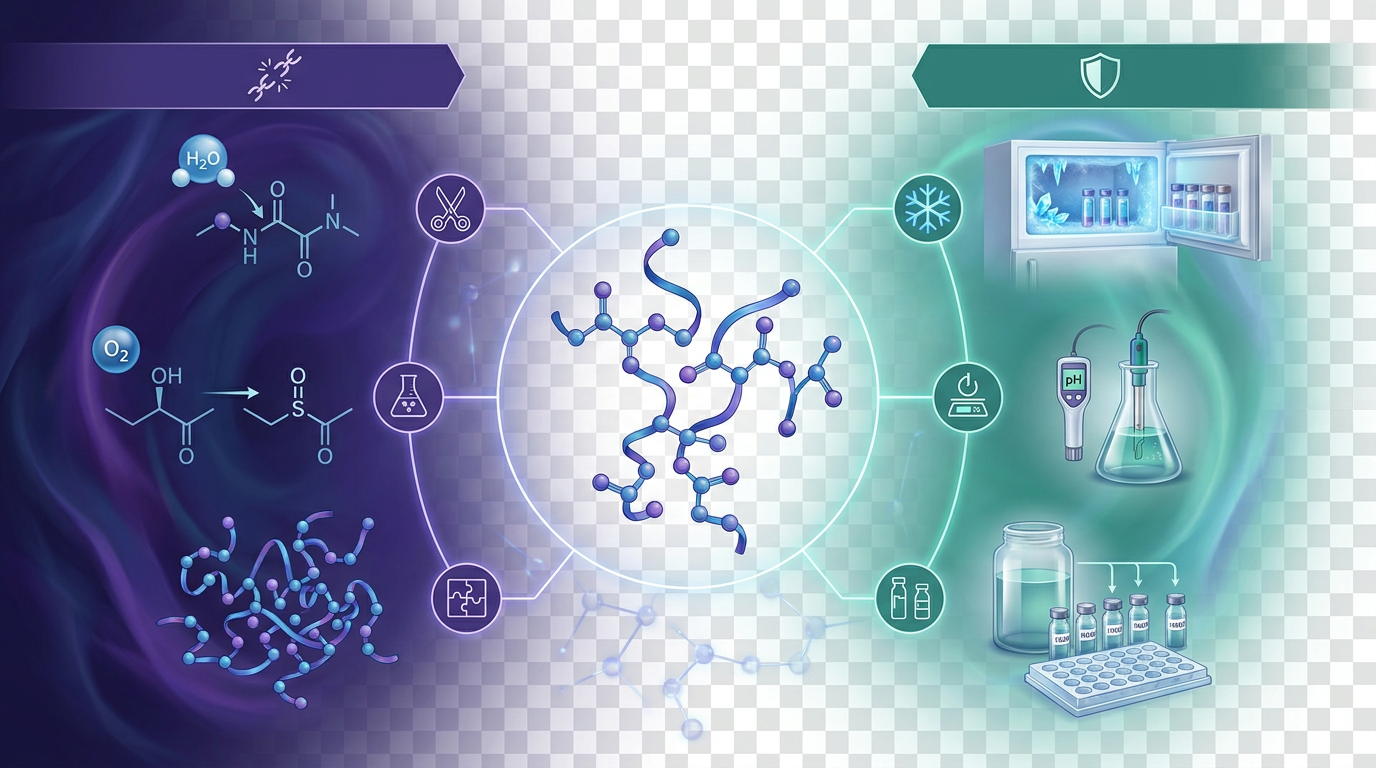
Reconstitution is a critical step. The choice of solvent and method can significantly influence peptide stability and solubility. General guidelines for reconstitution include:
* **Solvent Selection:** For most peptides, sterile, deionized water is the initial solvent of choice. However, highly hydrophobic peptides may require organic co-solvents such as acetonitrile (ACN), dimethyl sulfoxide (DMSO), or dimethylformamide (DMF). The maximum concentration of organic solvent should be carefully considered, particularly for *in vitro* cell culture applications, as these solvents can be cytotoxic. For example, DMSO is generally tolerated up to 0.1-1.0% in cell culture media, though lower concentrations are always preferred. For acidic or basic peptides, a small amount of acetic acid (0.1-1.0%) or ammonium hydroxide might be needed to aid initial dissolution. These considerations are vital for maintaining peptide integrity for subsequent peptide purity testing. * **Concentration:** Peptides should typically be reconstituted to a high stock concentration (e.g., 1-10 mg/mL or 1-10 mM) to minimize the amount of solvent required and reduce the likelihood of aggregation in dilute solutions. However, excessively high concentrations can also promote aggregation for some peptides. * **Dissolution Method:** Gentle mixing, such as swirling or mild sonication in a water bath, is preferred. Vigorous vortexing should be avoided, as it can induce shear stress, leading to aggregation and degradation, particularly for larger or aggregation-prone sequences. Warming the vial to room temperature prior to opening can prevent condensation and potential moisture uptake. * **Sterility:** All solvents and labware should be sterile, especially when the reconstituted peptide is destined for biological assays or cell culture. Filtration through a 0.22 µm sterile filter can further reduce microbial load if the peptide concentration and potential adsorption to the filter membrane allow.
### Long-Term Storage of Reconstituted Peptides
Once reconstituted, peptides are significantly less stable than in their lyophilized form. The following practices are recommended:
* **Aliquoting:** Immediately aliquot the reconstituted peptide into single-use aliquots. This minimizes freeze-thaw cycles, a major cause of degradation. Freeze-thaw cycles can promote aggregation, alter secondary structure, and lead to increased rates of chemical degradation due to localized concentration effects and changes in solution properties. * **Temperature:** Aliquots should be stored at -20°C or, preferably, -80°C for long-term storage. Avoid storing reconstituted peptides at 4°C for extended periods, as this temperature offers limited stability compared to frozen storage. * **pH and Buffering:** The pH of the reconstituted solution plays a critical role in stability. Many peptides exhibit optimal stability within a narrow pH range, often between pH 4 and 7. The selection of an appropriate buffer (e.g., phosphate, acetate, Tris) at a suitable concentration can help maintain the desired pH. For instance, literature from *Biophysical Journal* (e.g., 2005) emphasizes how pH can dramatically influence peptide aggregation kinetics. * **Additives:** For particularly unstable peptides, or those prone to aggregation, excipients such as BSA (bovine serum albumin), gelatin, or specific surfactants (e.g., Tween 20) can be added at low concentrations (e.g., 0.01-0.1%) to stabilize the peptide by reducing surface adsorption and aggregation. However, the compatibility of such additives with downstream assays must be thoroughly evaluated.
## Comparisons: Lyophilized vs. Solution Stability
It is widely accepted that lyophilized peptides offer superior long-term stability compared to peptides in solution. A comparative study from *Analytical Biochemistry* in 2008 demonstrated that a range of therapeutic peptides, when stored as lyophilized powders at -20°C, showed no significant degradation over several years. In contrast, the same peptides in aqueous solutions at 4°C exhibited measurable degradation (e.g., 5-15% loss of integrity) within weeks to months, depending on their sequence and solution conditions. This difference in stability primarily stems from the absence of water in the lyophilized state, which arrests hydrolytic reactions and significantly slows other chemical degradation pathways.
| Feature | Lyophilized Peptide | Reconstituted Peptide (Solution) | | :---------------- | :------------------------------------------------------ | :-------------------------------------------------------- | | **Storage Temp.** | -20°C to -80°C | -20°C to -80°C (aliquoted) | | **Stability** | Highly stable, years of shelf life | Less stable, weeks to months (even frozen) | | **Degradation** | Minimal, primarily slow oxidation if exposed to air/light | Hydrolysis, oxidation, deamidation, aggregation accelerate | | **Handling** | Requires careful reconstitution | Requires careful aliquoting, pH control, buffer selection | | **Risk Factors** | Moisture uptake, improper initial storage | Freeze-thaw cycles, inappropriate solvent/pH, contamination |
## Open Research Questions
Despite extensive research, several open questions remain concerning optimal peptide handling for maximum stability and experimental reproducibility, especially in the context of emerging peptide modalities:
* **Predictive Models for Stability:** Can advanced computational models accurately predict the optimal reconstitution and storage conditions for novel peptide sequences, minimizing the need for extensive empirical stability studies? This is particularly relevant for complex, modified, or cyclic peptides. * **Excipient Optimization:** What are the ideal excipients and their concentrations to stabilize highly aggregation-prone or oxidation-sensitive peptides without interfering with their biological activity or downstream assays? Research continues to explore novel excipients that offer enhanced protection without introducing confounding variables. * **Impact of Micro-Environment:** How do subtle variations in the micro-environment within a lyophilized cake (e.g., residual moisture gradients, amorphous vs. crystalline regions) affect long-term stability and subsequent reconstitution behavior? Understanding these micro-heterogeneities could lead to more robust lyophilization protocols. * **Non-Destructive Purity Assessment:** Are there advanced non-destructive methods for peptide purity testing in lyophilized or highly concentrated solutions that can provide rapid feedback without compromising the sample? Current methods often require dilution and can be time-consuming. * **Automation of Reconstitution:** How can automation be best leveraged for high-throughput, sterile, and reproducible reconstitution of diverse peptides, especially in large-scale screening efforts, while preserving peptide integrity?
## Risks and Evidence Gaps
Improper handling of research peptides introduces several significant risks that can compromise experimental integrity and lead to erroneous conclusions. The most prominent risks include:
1. **Loss of Potency/Activity:** Degradation of the peptide (e.g., hydrolysis, oxidation) can render it biologically inactive or reduce its potency, leading to false-negative results or inaccurate dose-response curves. 2. **Increased Heterogeneity:** Chemical modifications or aggregation can create a heterogeneous mixture of active and inactive species. This makes it challenging to interpret results accurately, as the 'effective concentration' of the active peptide becomes uncertain. This also severely impacts the reliability of peptide purity testing. 3. **Aggregation-Induced Artifacts:** Aggregation can lead to non-specific interactions, precipitation in assays, and even direct cellular toxicity independent of the peptide's intended mechanism, particularly in *in vitro* or cell-based studies. 4. **Contamination:** Non-sterile reconstitution practices can introduce microbial or particulate contamination, which can interfere with sensitive biological assays, especially in cell culture.
**Evidence Gaps:** While general guidelines are well-established, specific optimal conditions often vary widely based on individual peptide sequence, modifications, and intended application. There is a continuous need for more peptide-specific data, especially for novel or highly complex peptides. Many studies focus on a limited set of degradation pathways or stability parameters. Comprehensive, multi-parameter stability studies for a broader range of research peptides are still relatively scarce, making it challenging to extrapolate optimal conditions from one peptide to another. Furthermore, the long-term impact of various excipients on *in vivo* efficacy and safety in animal models, beyond simple *in vitro* stability, is an area that warrants further investigation.
## Practical Laboratory Considerations for Peptide Purity Testing
Ensuring the highest possible peptide purity throughout experimentation is crucial for reliable research outcomes. Peptide purity testing, often performed using high-performance liquid chromatography (HPLC) with UV detection or mass spectrometry (MS), assesses the percentage of the desired peptide relative to impurities (e.g., truncated sequences, deamidated forms, oxidized species). The validity of these tests hinges on proper sample handling.
* **Initial Purity Assessment:** Always confirm the purity of a newly received lyophilized peptide batch using analytical HPLC/MS. This establishes a baseline for comparison. The Certificate of Analysis (CoA) from the supplier provides initial purity, but *in-house* verification is good practice, especially for critical experiments or when concerns arise. * **Regular Monitoring:** For long-term studies or if a peptide has been stored for an extended period, periodic peptide purity testing of reconstituted stock solutions can be invaluable. This helps to identify any degradation that may have occurred during storage or repeated freeze-thaw cycles. * **Standard Operating Procedures (SOPs):** Develop and strictly adhere to SOPs for reconstitution, aliquoting, and storage. Standardizing these procedures across a laboratory minimizes variability due to technician differences and enhances reproducibility. * **Recording Details:** Meticulously record all relevant information: peptide name, lot number, supplier, date of receipt, storage conditions, date of reconstitution, solvent used, final concentration, aliquot volume, and any subsequent freeze-thaw cycles. This detailed documentation is invaluable for troubleshooting and for interpreting peptide purity testing results. * **Equipment Calibration:** Ensure that all equipment used for measuring and dispensing (e.g., pipettes, balances) is regularly calibrated to maintain accuracy in concentration preparation. * **Vial Selection:** Use high-quality, low-binding vials for storage, especially for dilute solutions, to prevent peptide adsorption to the container walls, which can lead to an apparent loss of concentration or activity. Glass vials are generally preferred over plastic for long-term storage due to lower extractable levels, but care must be taken to ensure glass sterility.
## FAQ Section