
Metabolic Research
GLP-1 Receptor Agonists: A Mechanistic Overview for Researchers
·Educational reference
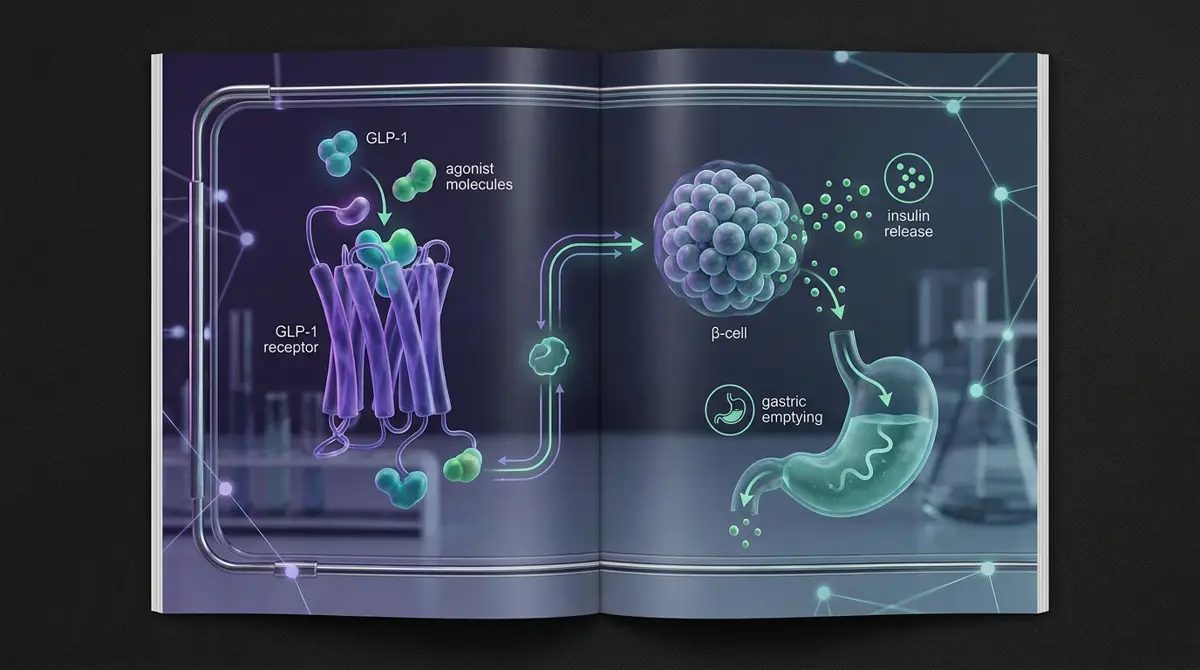
Glucagon-like peptide-1 (GLP-1) receptor agonists have become one of the most actively studied peptide classes in metabolic research. The native GLP-1 hormone is a 30-amino-acid incretin secreted by intestinal L-cells in response to nutrient intake. It binds the GLP-1 receptor (GLP-1R), a class B G-protein-coupled receptor expressed in pancreatic β-cells, central nervous system nuclei, the gastrointestinal tract and the cardiovascular system.
Synthetic analogues such as Semaglutide and Liraglutide were engineered to resist degradation by dipeptidyl peptidase-4 (DPP-4) and to bind serum albumin, extending half-life from minutes to days. This pharmacokinetic profile makes them especially useful as reference compounds in chronic-exposure laboratory models studying glucose homeostasis, lipid metabolism and feeding behaviour.
Mechanistically, GLP-1R activation in β-cells potentiates glucose-stimulated insulin secretion through a cAMP/PKA cascade, while suppressing glucagon release from α-cells. In the hypothalamus, agonism of GLP-1R in pro-opiomelanocortin (POMC) neurons reduces food intake in rodent models. Slowed gastric emptying further contributes to the observed reduction in postprandial glucose excursions in research animals.
Newer dual and triple agonists — Tirzepatide (GIP/GLP-1) and Retatrutide (GIP/GLP-1/glucagon) — broaden the pharmacology by recruiting additional incretin and energy-expenditure pathways. Comparative studies between these molecules form a substantial portion of the current metabolic-research literature and benefit from carefully characterised reference standards.
For laboratory researchers, the key practical considerations are batch-level identity confirmation via mass spectrometry, purity verification via HPLC, and stable lyophilised storage. Reconstitution protocols typically use bacteriostatic water and require cold-chain handling. Documentation including a certificate of analysis (COA) should accompany every reference vial used in published in-vitro work.
GLP-1 research continues to expand into neurodegenerative, cardiovascular and renal models, with the receptor's broad tissue distribution offering many under-explored pharmacological questions. This article is intended as an educational primer; researchers should always design protocols in consultation with appropriate institutional review.
Further reading on Peptide Intel Hub: verified research suppliers, how to read a certificate of analysis, every protocol from A to Z.