

Metabolic Research
GLP3, GLP2, and GLP1: Receptor Selectivity, Mechanism, and Peptide Storage Guidance
·Educational reference
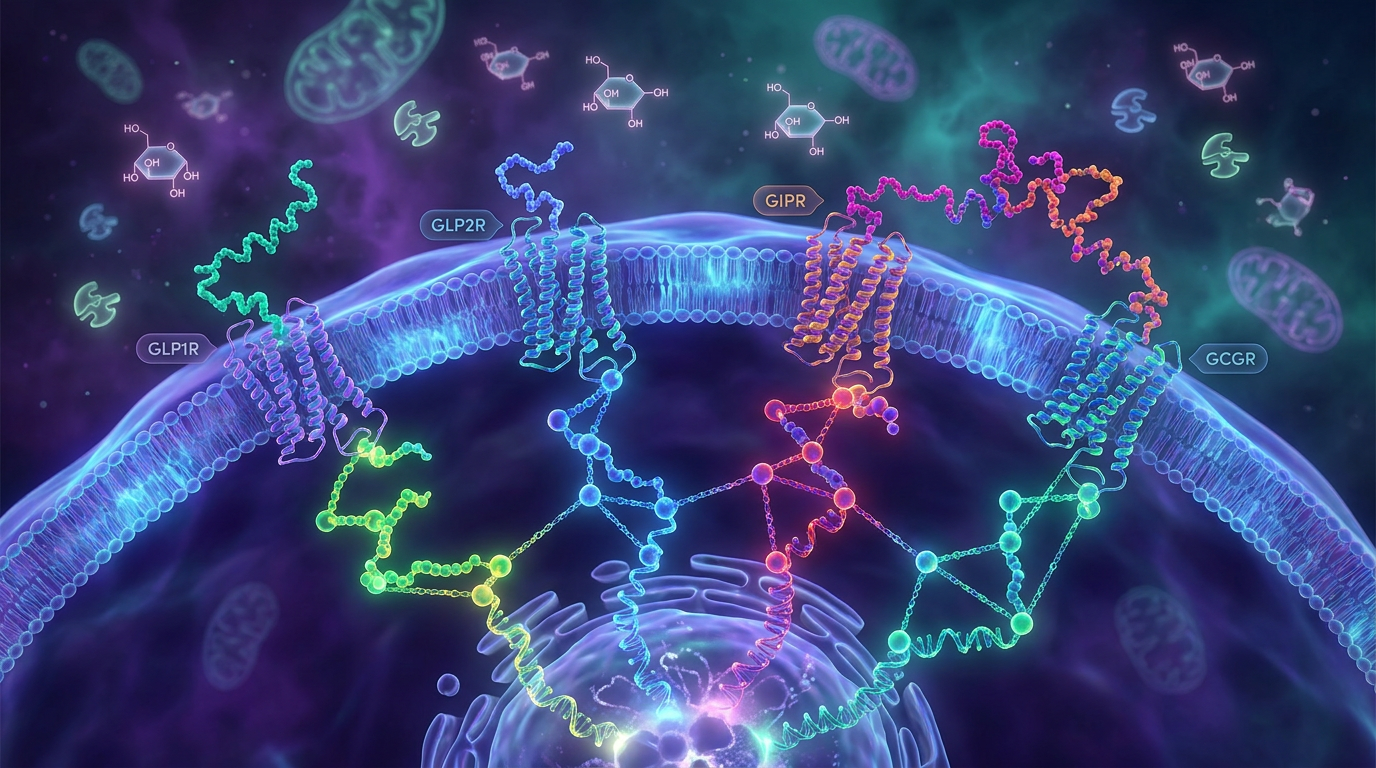
In the realm of metabolic research, the glucagon-like peptide (GLP) family represents a cornerstone for understanding glucose homeostasis, energy metabolism, and gastrointestinal function. While GLP1 is widely recognized for its effects on insulin secretion and glucose regulation, GLP2 and more recently developed GLP3 agents offer distinct and overlapping mechanisms of action that are critical for researchers to differentiate. Understanding their receptor selectivity, downstream signaling pathways, and comparative physiological effects is paramount for advancing therapeutic strategies. This detailed exploration is not only vital for appreciating their biological roles but also for practical laboratory considerations, such as a comprehensive peptide storage guide, ensuring the integrity and efficacy of these sensitive compounds in research settings.
### What are GLP1, GLP2, and GLP3 Peptides?
GLP1, GLP2, and GLP3 are endogenous peptides derived from the proglucagon gene, primarily synthesized and secreted by enteroendocrine L-cells in the intestine, among other tissues. Despite their shared genetic origin, their biological functions are remarkably diverse, driven by their differential engagement with specific G protein-coupled receptors (GPCRs).
* **GLP1 (Glucagon-Like Peptide-1):** A 30- or 31-amino acid peptide best known for its incretin effect, potentiating glucose-dependent insulin secretion from pancreatic beta cells. It also suppresses glucagon secretion, slows gastric emptying, and has central effects on appetite and satiety. * **GLP2 (Glucagon-Like Peptide-2):** A 33-amino acid peptide primarily known for its trophic effects on the intestinal mucosa, promoting crypt cell proliferation and inhibiting apoptosis, leading to enhanced nutrient absorption and gut barrier function. * **GLP3 (Triple Agonists):** While not an endogenous peptide in the same sense as GLP1 and GLP2, the term GLP3 commonly refers to research compounds engineered to activate three distinct receptors: the GLP1 receptor (GLP1R), the glucagon receptor (GCGR), and the glucose-dependent insulinotropic polypeptide receptor (GIPR). These are often referred to as 'triple agonists' in the research literature, designed to harness the synergistic effects of multiple metabolic pathways.
### Mechanism of Action and Receptor Selectivity
The divergent physiological roles of GLP1, GLP2, and GLP3 largely stem from their distinct receptor binding profiles and subsequent intracellular signaling cascades. This receptor selectivity dictates the biological outcomes observed in various research models.
#### GLP1 Receptor (GLP1R) Agonism
GLP1 primarily exerts its effects through activation of the GLP1R, a class B GPCR. Upon GLP1 binding, the GLP1R activates adenylyl cyclase, leading to an increase in intracellular cyclic AMP (cAMP) levels. This, in turn, activates protein kinase A (PKA) and exchange protein directly activated by cAMP (Epac2), initiating a cascade of events:
* **Pancreatic Beta Cells:** Increased insulin biosynthesis and secretion, enhanced beta-cell proliferation, and reduced apoptosis. This is glucose-dependent, meaning insulin secretion is potentiated only when glucose levels are elevated, thereby minimizing the risk of hypoglycemia. * **Pancreatic Alpha Cells:** Suppression of glucagon secretion. * **Stomach:** Delayed gastric emptying, contributing to postprandial glucose control and satiety. * **Brain:** Modulation of appetite, food intake, and neuroprotection.
Several research peptides have been developed to mimic or enhance GLP1R activity, often exhibiting resistance to degradation by dipeptidyl peptidase-4 (DPP-4), an enzyme that rapidly inactivates native GLP1.
#### GLP2 Receptor (GLP2R) Agonism
GLP2 specifically binds to and activates the GLP2R, another class B GPCR, which is highly expressed in the gastrointestinal tract, particularly in the small intestine. Like GLP1R, GLP2R activation also signals through increased intracellular cAMP. The primary effects of GLP2R activation include:
* **Intestinal Trophism:** Stimulation of crypt cell proliferation and differentiation, leading to increased villus height and mucosal surface area. This enhances nutrient absorption and digestive capacity. * **Gut Barrier Function:** Strengthening of the intestinal barrier, reducing permeability. * **Blood Flow:** Increased mesenteric blood flow. * **Inflammation:** Modulation of intestinal inflammatory responses.
Research into GLP2 and its analogs often focuses on conditions involving intestinal insufficiency or injury, leveraging its potent trophic effects on the gut. The stability of GLP2 is also challenged by DPP-4, and research compounds are often designed to circumvent this degradation.
#### GLP3 (Triple Agonist) Mechanisms
Unlike GLP1 and GLP2, GLP3 peptides are synthetic constructs engineered to simultaneously engage GLP1R, GCGR, and GIPR. This multi-receptor agonism aims to leverage the distinct yet complementary metabolic effects of each pathway:
* **GLP1R Agonism:** Contributes to glucose-dependent insulin secretion, glucagon suppression, and gastric emptying delay, similar to pure GLP1 agonists. * **GIPR Agonism:** Glucose-dependent insulin secretion, enhanced beta-cell survival, and potential effects on adipose tissue metabolism and bone. GIP (glucose-dependent insulinotropic polypeptide) is another incretin hormone, and its receptor, GIPR, is widely expressed. * **GCGR Agonism:** Glucagon receptor activation can lead to increased hepatic glucose output. However, in the context of GLP3 triple agonists, this effect is often modulated or counteracted by the strong GLP1R and GIPR agonism. Research suggests that a balanced activation can lead to increased energy expenditure, lipolysis, and suppression of appetite via central mechanisms. The strategic inclusion of GCGR agonism aims to enhance weight loss beyond what is achievable with GLP1R/GIPR dual agonism, often by increasing energy expenditure.
The combined effect of GLP3 is hypothesized to lead to superior improvements in glycemic control and body weight reduction compared to single or dual agonists, by orchestrating a broader metabolic response involving multiple organ systems. The precise balance of agonism at each receptor is a critical design consideration for these research compounds.
### What the Research Shows: Comparative Studies
Research into GLP1, GLP2, and GLP3 has illuminated their distinct and overlapping roles in metabolic regulation. Studies have utilized a range of models, from *in vitro* cell lines to *in vivo* animal models, to characterize their effects.
* **GLP1 Research (e.g., *Diabetes*, 2009; *Cell Metabolism*, 2017):** Extensive literature demonstrates that GLP1R agonists consistently improve glucose tolerance, reduce HbA1c, and promote weight loss in various research models of metabolic dysfunction. Their effects on satiety and gastric emptying are well-documented, making them targets for metabolic regulation. * **GLP2 Research (e.g., *Gastroenterology*, 2000; *Journal of Clinical Investigation*, 2010):** Studies with GLP2R agonists show significant increases in intestinal mucosal mass, improvements in nutrient absorption, and enhanced gut barrier function in models of short bowel syndrome, inflammatory bowel disease, and intestinal injury. This highlights GLP2's specific role in gastrointestinal health. * **GLP3 (Triple Agonist) Research (e.g., *Nature Medicine*, 2018; *Molecular Metabolism*, 2021):** Early research in rodent and non-human primate models suggests that GLP3 compounds achieve superior reductions in body weight and blood glucose levels compared to GLP1R or GLP1R/GIPR dual agonists. These studies often attribute the enhanced efficacy to the synergistic action of all three receptors, particularly the glucagon component contributing to increased energy expenditure. For instance, some investigations have shown that the GCGR component in GLP3 peptides can increase metabolic rate and promote lipolysis, complementing the insulinotropic and satiety effects of GLP1R and GIPR agonism.
**Key Differences in Observed Effects:**
| Feature | GLP1 Agonists | GLP2 Agonists | GLP3 (Triple Agonists) | | :--------------------- | :---------------------------------------------- | :---------------------------------------------- | :------------------------------------------------- | | **Primary Target** | Pancreas, Stomach, Brain | Intestine | Pancreas, Adipose Tissue, Liver, Brain | | **Key Mechanisms** | Glucose-dependent insulin, glucagon suppression, gastric emptying delay, satiety | Intestinal trophism, barrier function, nutrient absorption | Glucose-dependent insulin, glucagon suppression, gastric emptying delay, satiety, increased energy expenditure, lipolysis | | **Main Research Focus**| Glucose homeostasis, weight management | Intestinal disorders, short bowel syndrome | Significant weight loss, profound glycemic control | | **Receptor Selectivity**| GLP1R | GLP2R | GLP1R, GIPR, GCGR (balanced agonism) |
### Comparisons: Single, Dual, and Triple Agonism

The progression from single-receptor GLP1 agonism to multi-receptor strategies reflects an ongoing effort to improve metabolic outcomes. Dual agonists, typically combining GLP1R and GIPR agonism, demonstrated enhanced efficacy over GLP1R monotherapy in terms of glycemic control and weight reduction in preclinical models. This led to the hypothesis that further synergistic effects could be achieved by adding a third receptor target, such as GCGR.
GLP3 compounds aim to capitalize on this synergy by influencing multiple metabolic axes simultaneously. The GIPR component in GLP3 is thought to complement GLP1R by further enhancing insulin secretion and potentially having direct effects on adipose tissue. The GCGR component, when appropriately balanced, is hypothesized to induce a state of energy deficit by increasing hepatic glucose output and lipolysis, thereby driving greater weight loss without necessarily inducing hyperglycemia due to the concurrent strong insulinotropic effects of GLP1R and GIPR activation. This complex interplay is a key area of ongoing research.
### Open Research Questions and Evidence Gaps
Despite significant advancements, several key questions remain regarding GLP1, GLP2, and GLP3:
* **Optimal Receptor Balance for GLP3:** What is the ideal ratio of agonism across GLP1R, GIPR, and GCGR for maximal efficacy and minimal off-target effects in GLP3 compounds? This is likely model-dependent. * **Long-Term Effects:** While short-term studies show promise, the long-term metabolic and physiological effects of sustained multi-receptor agonism need further investigation in chronic research models. * **Tissue-Specific Responses:** How do different tissues respond to the complex signaling cascades initiated by GLP3, and are there specific cell populations that exhibit unique sensitivities? * **Impact on Gut Microbiome:** Given GLP2's role in gut health and the systemic metabolic effects of GLP1 and GLP3, their potential interactions with the gut microbiome warrant deeper exploration. * **Novel Receptor Targets:** Are there other receptors or pathways that, when combined with GLP1, GLP2, or GIP, could offer additional therapeutic advantages?
Addressing these questions will require sophisticated experimental designs and advanced analytical techniques, further elucidating the intricate biology of these peptide systems.
### Risks and Evidence Gaps
While promising, research into these peptides, especially GLP3, is not without considerations. Potential off-target effects or an imbalanced receptor activation could lead to undesirable outcomes. For example, excessive glucagon agonism without sufficient counterbalance from GLP1R/GIPR could theoretically lead to hyperglycemia. Similarly, while GLP2 has trophic effects on the gut, unchecked proliferation could be a concern in certain contexts. Rigorous *in vitro* and *in vivo* toxicology studies are essential to fully characterize the safety profile of novel peptide constructs.
The evidence for GLP3 compounds is still largely derived from preclinical models, and a thorough understanding of their translational potential requires continued, meticulous research. This includes understanding potential species-specific differences in receptor expression and signaling pathways, which can impact the translatability of findings from animal models to human physiology.
### Practical Laboratory Considerations: A Comprehensive Peptide Storage Guide
To ensure the reliability and reproducibility of research involving GLP1, GLP2, and GLP3 peptides, meticulous handling and storage are paramount. These compounds are delicate and susceptible to degradation by various factors, including temperature, light, and enzymatic activity. Following a stringent peptide storage guide is crucial for maintaining their biological activity and preventing experimental variability.
1. **Initial Receipt and Aliquoting:** * Upon receipt, peptides should be immediately stored at recommended temperatures (typically -20°C or -80°C for lyophilized powder). * For stock solutions, reconstitute with appropriate sterile, deionized water or buffers (e.g., PBS with 0.1% BSA for GLP1/GLP2 to minimize adsorption to plastic) to the desired concentration. Avoid multiple freeze-thaw cycles by aliquoting into small, single-use vials. Label each aliquot clearly with concentration, date, and storage conditions.
2. **Storage Conditions for Lyophilized Powder:** * **Temperature:** Store at -20°C or -80°C. Lower temperatures are generally preferred for long-term storage to prevent degradation. * **Humidity:** Keep desiccated to prevent moisture absorption, which can lead to aggregation and reduced stability. Vacuum sealing or storage in a desiccator is recommended. * **Light:** Protect from light, as some peptides are photosensitive. Store in amber vials or foil-wrapped containers.
3. **Storage Conditions for Solutions:** * **Temperature:** Store at -20°C or -80°C. Once reconstituted, peptides are less stable than in lyophilized form. Refrigerated storage (2-8°C) is typically for short-term use (days to weeks), while -20°C or -80°C is for long-term storage of aliquoted stock solutions. * **Buffer:** Use appropriate buffers. For GLP1 and GLP2, solutions with a slightly acidic to neutral pH (e.g., pH 4-7) are often recommended. The addition of excipients like albumin (e.g., 0.1% bovine serum albumin) can prevent peptides from adsorbing to the plastic of tubes or plates, which is particularly important for low concentration solutions. Some peptides may also benefit from the addition of antimicrobial agents if stored for extended periods at refrigerated temperatures. * **Aliquoting:** Store in small aliquots to minimize the impact of freeze-thaw cycles. Each cycle can cause denaturation, aggregation, and loss of activity. * **Vial Material:** Use low-binding plastic vials (e.g., polypropylene) to minimize peptide adsorption to the container walls.
4. **Handling Best Practices:** * **Sterility:** Always use sterile techniques and materials when handling peptides, especially for *in vitro* or *in vivo* research, to prevent contamination. * **Reconstitution:** Reconstitute slowly and gently. Avoid vigorous vortexing, which can shear or denature peptides. Gentle pipetting or rolling can facilitate dissolution. * **Expiration:** Adhere to the manufacturer's recommended shelf life for both lyophilized and reconstituted forms. When in doubt, prepare fresh solutions.
Adhering to this peptide storage guide ensures that the integrity and biological activity of GLP1, GLP2, and GLP3 research compounds are maintained, leading to more consistent and reliable experimental results. This is as critical as understanding their receptor selectivity and mechanisms of action for successful metabolic research.
### FAQ: Frequently Asked Questions in Peptide Research
#### ### What is the primary difference in receptor binding for GLP1, GLP2, and GLP3?
GLP1 primarily binds to the GLP1 receptor (GLP1R), GLP2 selectively binds to the GLP2 receptor (GLP2R), while GLP3 compounds are engineered to activate three distinct receptors: GLP1R, glucose-dependent insulinotropic polypeptide receptor (GIPR), and glucagon receptor (GCGR).
#### ### How do GLP1 and GLP2 contribute to metabolic regulation differently?
GLP1 primarily regulates glucose homeostasis by stimulating insulin secretion, suppressing glucagon, and slowing gastric emptying. GLP2, in contrast, focuses on intestinal health by promoting mucosal growth, enhancing nutrient absorption, and strengthening the gut barrier. Their direct contributions to metabolic regulation, therefore, diverge significantly in focus.
#### ### Why are triple agonists (GLP3) considered advantageous over single or dual agonists?
GLP3 compounds are hypothesized to offer superior metabolic benefits, particularly in terms of weight loss and glycemic control, by simultaneously engaging GLP1R, GIPR, and GCGR. This multi-receptor activation provides a broader, synergistic influence on energy metabolism, adipose tissue, and glucose regulation that is greater than single or dual agonism alone, by leveraging mechanisms like increased energy expenditure via glucagon receptor activation.
#### ### What are the critical aspects of a peptide storage guide for research compounds?