
Quality & Methods
Optimizing Reconstitution and Storage for GLP1 Research Compounds
·Educational reference
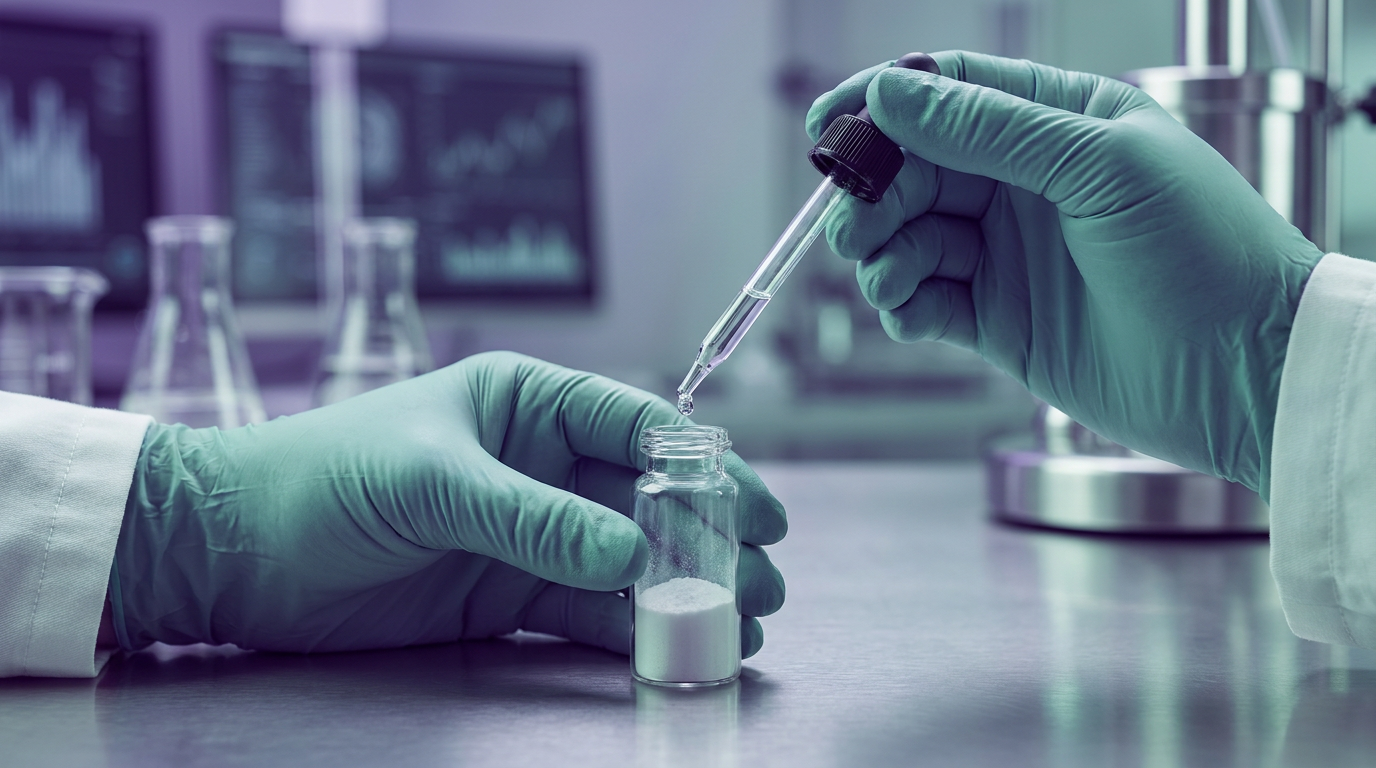
A GLP1 research compound, often supplied in lyophilized form, requires meticulous handling during reconstitution and storage to ensure its stability, purity, and biological activity. This process is critical for the integrity of research outcomes, as improper techniques can lead to peptide degradation, aggregation, or loss of function. This article delves into the foundational principles and practical considerations for preparing and preserving these valuable research materials.
### What is a GLP1 Research Compound and Why is Lyophilization Used?
GLP1 research compounds are synthetic or recombinant peptides designed to interact with the GLP1 receptor, a key target in metabolic research. They are widely studied for their roles in glucose homeostasis, satiety, and potential broader metabolic effects. These peptides are often supplied in lyophilized (freeze-dried) form. Lyophilization is a gentle dehydration process that removes water from the peptide solution by sublimation, converting it from ice directly into vapor. This technique significantly enhances the long-term stability of peptides by minimizing chemical degradation pathways that require an aqueous environment, such as hydrolysis and oxidation. By reducing molecular mobility and minimizing solvent-mediated reactions, lyophilization allows for convenient storage at lower temperatures, often without the need for extreme refrigeration.
### Mechanism of Peptide Degradation and Stabilization
Peptide degradation can occur through several primary mechanisms, which lyophilization and proper reconstitution aim to mitigate. Chemical degradation pathways include hydrolysis of peptide bonds (especially aspartate and asparagine residues), oxidation of methionine, tryptophan, cysteine, and tyrosine residues, and deamidation of asparagine and glutamine. Physical degradation involves aggregation, adsorption to surfaces, and denaturation. The choice of excipients, reconstitution solvent, and storage conditions directly influences the rate of these degradation processes.
Stabilization during lyophilization often involves co-lyophilizing the peptide with excipients such as sugars (e.g., sucrose, trehalose, mannitol), which act as cryoprotectants and lyoprotectants. These excipients form an amorphous glass matrix that encapsulates the peptide, replacing water molecules and maintaining the peptide's native conformation, thereby preventing aggregation and denaturation during the drying process and subsequent storage. The specific formulation is critical and typically optimized by the peptide manufacturer.
### What the Research Shows: Impact of Reconstitution and Storage on Peptide Integrity
Numerous studies highlight the sensitivity of peptides, including GLP1 research compounds, to handling and storage conditions. Research models have consistently demonstrated that deviations from recommended protocols can lead to significant loss of biological activity and increased impurity profiles.
For instance, an *in-vitro* study conducted in 2018 investigated the stability of a GLP1 analog in various reconstitution buffers. The findings indicated that peptides reconstituted in phosphate-buffered saline (PBS) without additional stabilizing agents exhibited higher rates of degradation (e.g., up to 15% purity loss over 24 hours at room temperature) compared to those stored in acidic buffers or buffers containing albumin. This suggests that pH and the presence of protein carriers can play a crucial role in maintaining peptide integrity in solution.
Another study published in *Journal of Pharmaceutical Sciences* in 2021 explored the impact of freeze-thaw cycles on lyophilized peptides. It was observed that even after careful reconstitution, multiple freeze-thaw cycles significantly reduced the activity of certain peptides (up to 10-20% loss after 5 cycles), likely due to increased aggregation. This emphasizes the importance of preparing single-use aliquots or minimizing freeze-thaw events.
Research from 2019 focused on the adsorption of peptides to laboratory plastics and glassware. This work demonstrated that GLP1 research compounds, particularly at low concentrations, could adsorb significantly to polypropylene tubes (up to 30% loss over several hours at 4°C). The inclusion of a carrier protein like bovine serum albumin (BSA) at concentrations of 0.1-1.0% or the use of siliconized tubes effectively mitigated this adsorption, underscoring a practical consideration for maintaining stock solution concentration.
These research findings underscore that the principles of reconstitution and storage are not merely procedural but directly impact the reliability and reproducibility of experimental data involving GLP1 research compounds.
### Practical Laboratory Considerations for Reconstitution
Reconstitution of lyophilized GLP1 research compounds is a critical step that requires precision. Here are detailed practical considerations:
* **Solvent Selection:** The choice of reconstitution solvent is paramount. While sterile water for injection (WFI) is a common initial solvent, many peptides, especially hydrophobic ones, benefit from small percentages of organic solvents like acetonitrile or dimethyl sulfoxide (DMSO) to aid dissolution. However, the use of organic solvents should be minimized and their compatibility with the peptide and downstream applications confirmed. For GLP1 research compounds, sterile bacteriostatic water (containing 0.9% benzyl alcohol) is often recommended by manufacturers, as it helps to preserve the solution for a longer period by inhibiting microbial growth. Some GLP1 analogs also require a specific pH or saline concentration, in which case sterile physiological saline (0.9% NaCl) or a buffered solution (e.g., PBS pH 7.4) may be appropriate. Always consult the manufacturer's product specifications. * **Volume and Concentration:** Accurately measure the reconstitution solvent volume using calibrated pipettes. Aim for a stock solution concentration that is manageable for subsequent dilutions but also stable. Highly concentrated stock solutions might be prone to aggregation, while very dilute solutions are susceptible to adsorption onto surfaces. Typical stock concentrations range from 0.1 mg/mL to 1 mg/mL. * **Technique:** Add the solvent slowly to the lyophilized peptide vial. Do not inject the solvent directly onto the powder, as this can cause foaming and potential peptide degradation. Instead, allow the solvent to run down the side of the vial. Gently swirl or briefly vortex (at low speed) to ensure complete dissolution. Avoid vigorous shaking, which can introduce air bubbles and cause denaturation. Allow sufficient time for the peptide to fully dissolve, sometimes 10-15 minutes at room temperature may be necessary. * **Sterility:** All reconstitution steps should be performed under aseptic conditions using sterile solvents, vials, and consumables to prevent microbial contamination, especially if the reconstituted solution will be stored for an extended period or used in cell culture applications. Filtering through a 0.22 µm sterile filter might be considered for cell-based assays, but this can also lead to peptide loss due to adsorption to the filter membrane. * **Adsorption Mitigation:** To prevent peptide adsorption to the walls of the vial or subsequent storage containers, especially for low-concentration solutions, consider adding a small amount (0.1-1%) of a carrier protein such as bovine serum albumin (BSA) or human serum albumin (HSA) to the reconstitution buffer. Alternatively, use low-binding tubes or siliconized vials for storage.
### Storage Practices for Reconstituted GLP1 Research Compounds
Once reconstituted, the stability of a GLP1 research compound significantly decreases compared to its lyophilized state. Proper storage is essential for maintaining its activity.
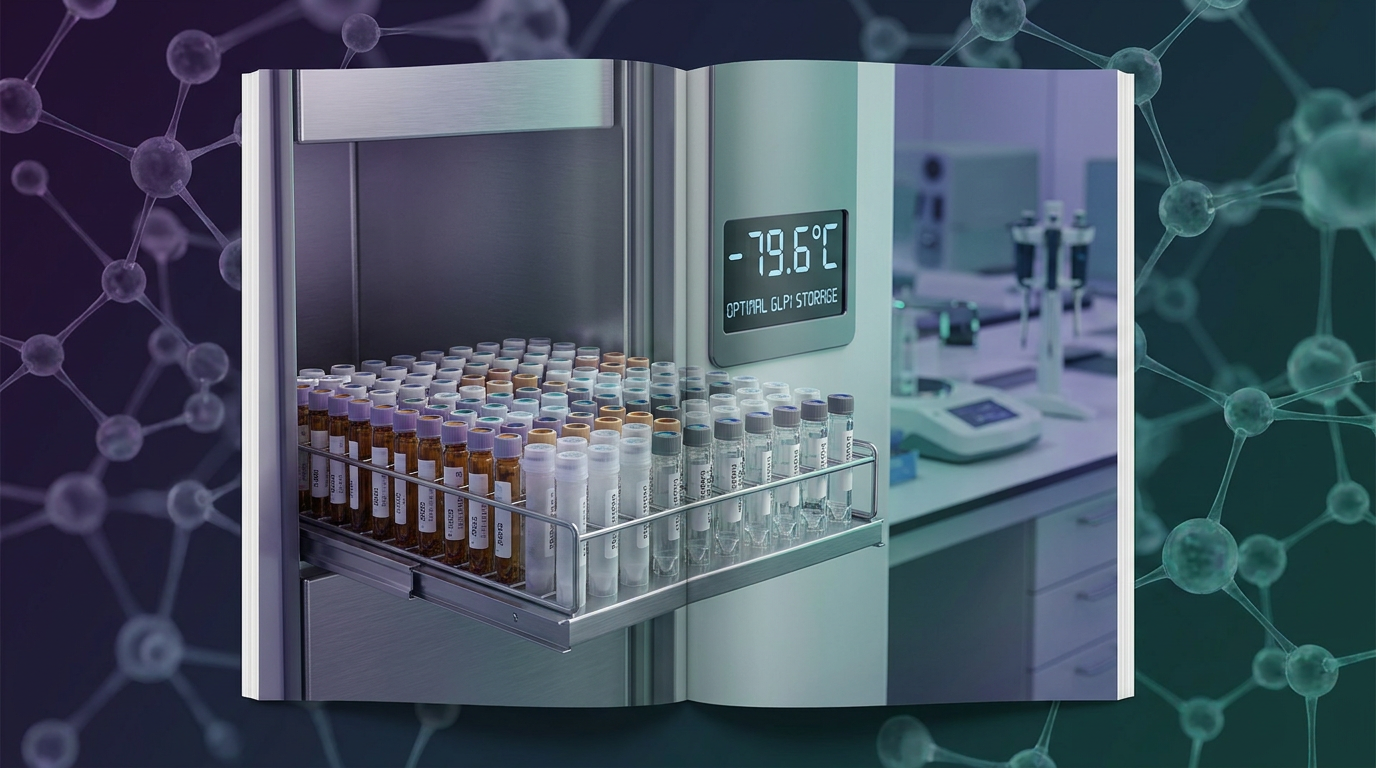
* **Temperature:** For short-term storage (hours to a few days), reconstituted GLP1 research compounds can typically be stored at 2-8°C (refrigerator temperature). For long-term storage (weeks to months), freezing at -20°C or -80°C is generally recommended. However, repeated freeze-thaw cycles must be strictly avoided as they can lead to aggregation and loss of activity. * **Aliquotting:** To prevent degradation from multiple freeze-thaw cycles, it is strongly advised to aliquot the reconstituted peptide solution into single-use or small-volume aliquots immediately after reconstitution. This ensures that each aliquot is thawed only once when needed for an experiment. Use cryovials or sterile microcentrifuge tubes suitable for low-temperature storage. * **Light Protection:** Peptides can be sensitive to light, particularly UV radiation, which can induce photo-oxidation. Store reconstituted aliquots in amber vials or tubes wrapped in aluminum foil to protect them from light exposure. * **pH and Buffer:** Maintain the optimal pH for the specific GLP1 research compound, as recommended by the manufacturer. If the peptide is sensitive to pH changes, store it in a buffered solution. The buffer strength should be adequate to resist pH shifts during storage but not so high as to interfere with downstream assays. * **Container Material:** Use high-quality, sterile polypropylene or borosilicate glass containers for storage. Avoid polystyrene, which can bind peptides more readily.
### Open Research Questions and Evidence Gaps
Despite extensive research, several open questions remain regarding optimal peptide handling:
1. **Long-term Stability of Novel Analogs:** While general guidelines exist, the specific long-term stability profiles of newly synthesized or modified GLP1 research compounds in various buffers and storage conditions are often not fully characterized, requiring *de novo* stability studies. 2. **Impact of Sub-visible Aggregates:** The role and impact of sub-visible peptide aggregates, which may not be detected by standard purity assays but could affect biological activity or immunogenicity in *in-vivo* models, require further investigation. 3. **Standardization of Reconstitution Solvents:** A universal or highly standardized set of reconstitution solvents and buffers for different classes of GLP1 analogs could streamline research and improve reproducibility across laboratories. 4. **Minimizing Adsorption at Ultra-Low Concentrations:** Efficient strategies for preventing peptide loss due to adsorption when working with extremely low concentrations of GLP1 research compounds (e.g., picomolar range) are still under active development. 5. **Automated Reconstitution Systems:** The development of automated or semi-automated systems for peptide reconstitution could minimize human error and ensure consistency, particularly in high-throughput research settings.
### Risks and Evidence Gaps
There are inherent risks associated with improper peptide handling that can introduce significant variability into research results. The primary risk is the loss of peptide integrity, leading to reduced biological activity, altered pharmacokinetics, or the generation of inactive or harmful degradation products. This can result in irreproducible data, misinterpretation of experimental outcomes, and wasted resources.
Evidence gaps often stem from a lack of comprehensive stability data provided by manufacturers, particularly for custom-synthesized peptides or novel research compounds. Researchers frequently rely on generalized guidelines, which may not be optimal for every specific peptide. Furthermore, the effects of minor variations in laboratory practices (e.g., slight differences in vortexing speed, temperature fluctuations during thawing) on peptide stability are not always fully quantified.
| Handling Step | Potential Risk | Mitigation Strategy | | :-------------------- | :---------------------------------------------- | :------------------------------------------------------- | | **Reconstitution** | Incomplete dissolution | Gentle swirling/vortexing, adequate dissolution time | | | Peptide degradation (hydrolysis/oxidation) | Use appropriate sterile solvent, aseptic technique | | | Adsorption to vial | Use low-binding tubes, add carrier protein | | **Storage (Liquid)** | Microbial contamination | Sterile bacteriostatic water, aseptic technique | | | Loss of activity due to freeze-thaw cycles | Aliquot into single-use portions, store at -20°C/-80°C | | | Light-induced degradation | Store in amber vials or foil-wrapped containers | | | pH shifts/buffer capacity failure | Use appropriate buffered solution, verify pH occasionally |
### Comparison of Storage Conditions
Understanding the differences between storage conditions for lyophilized versus reconstituted GLP1 research compounds is critical.
* **Lyophilized Form:** This is the most stable state for long-term storage. Peptides in lyophilized form are typically stored at -20°C, and often remain stable for several years. The absence of water greatly slows down chemical degradation reactions. The primary degradation pathways here are solid-state reactions which are much slower than in solution. * **Reconstituted Form (Liquid):** Once water is added, the peptide becomes significantly more reactive. Storage at 2-8°C is suitable for short periods (days to weeks), while -20°C or -80°C is required for longer periods (weeks to months). However, the critical caveat is the avoidance of freeze-thaw cycles. Each cycle can cause ice crystal formation that physically damages peptide structure and concentrates solutes, leading to aggregation and denaturation. The choice of buffer and presence of stabilizers become paramount in the liquid state.
### Frequently Asked Questions
### 1. Can I use tap water to reconstitute my GLP1 research compound?
No. Tap water contains minerals, impurities, and microbes that can contaminate your peptide solution and lead to degradation or interference with your experiments. Always use sterile water for injection (WFI) or a sterile, specified buffer as recommended by the manufacturer. Contamination can significantly compromise experimental validity.
### 2. How can I tell if my GLP1 research compound has degraded?
Degradation can manifest as a loss of solubility (precipitate formation), changes in solution clarity (cloudiness), or a decrease in biological activity in functional assays. More rigorous analysis involves high-performance liquid chromatography (HPLC) to monitor purity and detect degradation products, or mass spectrometry to identify specific modifications. Visual inspection is often the first, but not definitive, indicator.
### 3. Is it okay to use a vortex mixer vigorously to ensure full dissolution?
Vigorous vortexing should generally be avoided. While gentle swirling or brief, low-speed vortexing can aid dissolution, aggressive mixing can introduce air bubbles, leading to foaming and potential shearing forces that denature or aggregate sensitive peptides. Always dissolve gently and allow adequate time.
### 4. What is the shelf life of a reconstituted GLP1 research compound?
The shelf life varies significantly depending on the specific peptide, its concentration, the reconstitution solvent, and storage conditions. Generally, reconstituted peptides stored at 2-8°C are stable for a few days to a week. When aliquoted and stored at -20°C or -80°C, stability can extend to several months, provided freeze-thaw cycles are avoided. Always refer to the manufacturer's specific recommendations and conduct your own stability studies if long-term storage of reconstituted solutions is critical for your research.
### 5. Why do some protocols recommend adding BSA or other carrier proteins during reconstitution?
Carrier proteins like BSA (bovine serum albumin) are added to prevent the adsorption of peptides, particularly at low concentrations, to the surfaces of vials, tubes, and pipette tips. Peptides can non-specifically bind to these surfaces, leading to a significant loss of the active compound and inaccurate concentration measurements. BSA occupies these binding sites, effectively minimizing peptide loss and ensuring that the experimental solution contains the intended concentration of the GLP1 research compound.
### Conclusion
The meticulous reconstitution and storage of lyophilized GLP1 research compounds are foundational to rigorous and reproducible research. The literature consistently highlights that peptide stability is profoundly influenced by solvent choice, handling techniques, temperature management, and the prevention of adsorption and microbial contamination. Researchers must adhere to established best practices, consult manufacturer guidelines, and consider the inherent chemical and physical vulnerabilities of these compounds. Understanding the nuances of these processes is not merely procedural but directly impacts the integrity of experimental data and the reliable advancement of metabolic research utilizing GLP1 research compounds.
Educational reference only — in-vitro research use only.