
Longevity Research
Can Peptides Degrade During Shipping? Key Factors
·Educational reference
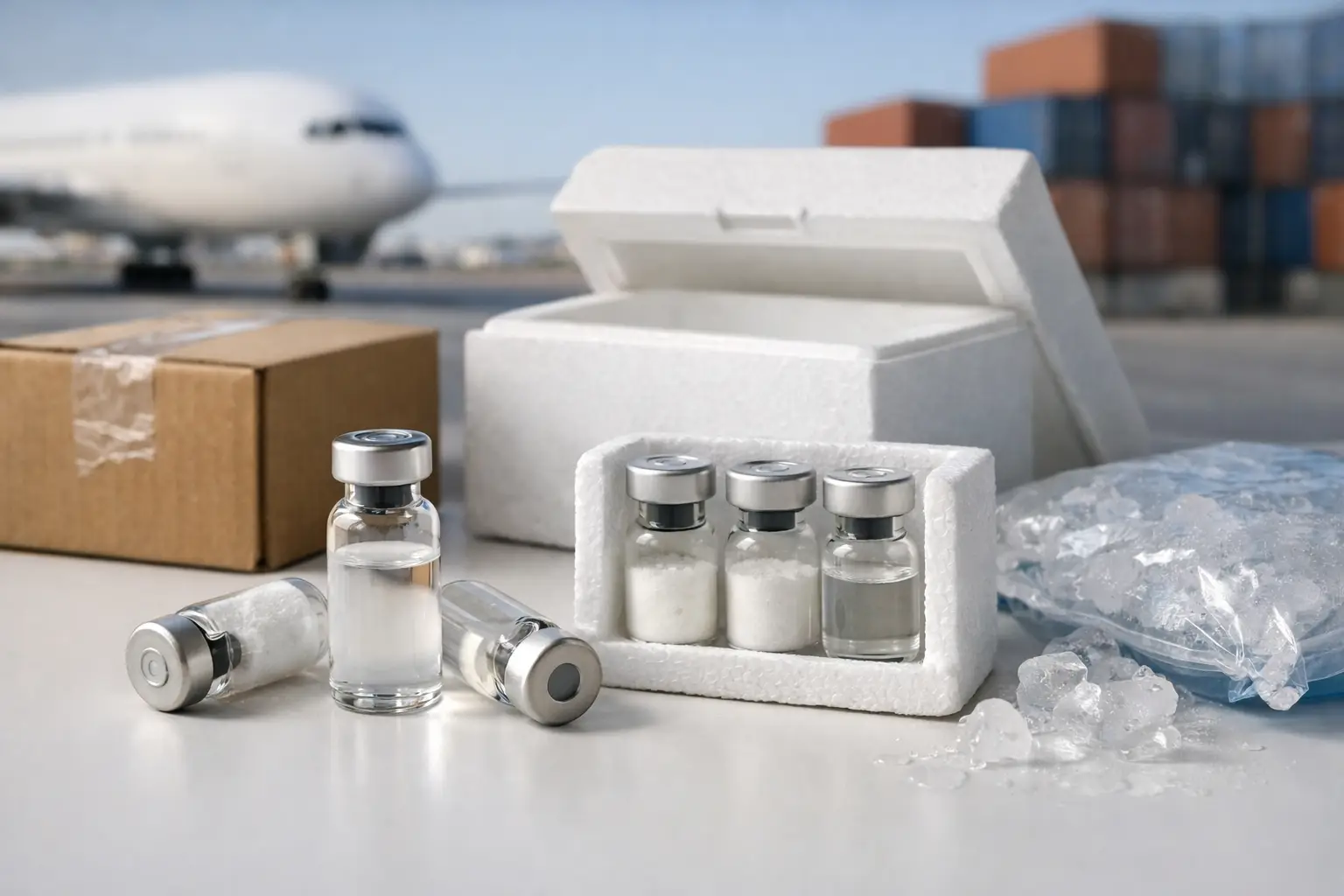
A peptide can leave a facility with strong analytical documentation and still face avoidable stress before it reaches the researcher. So, can peptides degrade during shipping? Yes, under unsuitable conditions, peptide integrity can be affected by temperature exposure, moisture, light, oxygen, handling and time in transit. The practical question is not whether shipping creates any risk, but whether the material, packaging and logistics plan are appropriate for the compound’s documented storage requirements.
For research-use peptide materials, shipping should be considered part of the wider quality system. Batch purity data and certificates of analysis describe the material at the point of testing. Packaging and fulfilment practices help preserve that condition while the material is moving through warehouses, customs processes and final delivery networks.
Can peptides degrade during shipping?
Peptides are short chains of amino acids linked by chemical bonds. Their stability varies considerably according to sequence, molecular structure, physical form and formulation. Some compounds tolerate ordinary short-duration transport well when correctly packaged. Others are more sensitive to heat, repeated temperature cycling or water exposure.
Degradation does not always mean that a vial visibly changes. A material may appear unchanged while chemical modifications have occurred at a molecular level. Depending on the peptide, these can include oxidation, hydrolysis, deamidation or aggregation. Such changes may alter purity, identity or consistency in a research setting.
Shipping risk therefore depends on the full context. A brief, well-managed journey in stable weather is different from a parcel held for several days in a hot depot, left in direct sunlight, or exposed to condensation after moving between cold and warm environments. International transport adds further variables, particularly where customs clearance or weekend handling extends delivery times.
Why physical form matters
The format of the material is one of the most relevant factors in transit stability. Many research peptides are supplied in lyophilised form, meaning water has been removed through freeze-drying. This generally reduces the opportunity for water-driven reactions and can make transport more manageable than for a peptide already dissolved in a liquid.
Lyophilisation is not a universal guarantee of stability. A dry peptide can still be affected by high temperatures, humidity entering the vial, light exposure or physical compromise to the closure. The exact sequence also matters. Peptides containing amino acids more prone to oxidation or other reactions may need closer handling controls than a more stable sequence.
Reconstituted material requires greater caution because water can accelerate several degradation pathways. Once a peptide is in solution, its stability may be influenced by solvent choice, concentration, pH, container composition and storage history. This is why researchers should distinguish between shipping requirements for unopened, lyophilised material and storage requirements following reconstitution. They are not interchangeable.
Temperature is not the only shipping variable
Temperature receives the most attention because prolonged heat can increase reaction rates. It is also easier to understand than less visible issues such as humidity exposure. Yet a package marked for temperature-conscious handling is only one part of the picture.
Repeated swings between temperatures can be problematic, particularly when they create condensation. If a cold parcel is opened immediately in a humid room, moisture may condense on a chilled vial or closure. Allowing sealed packaging to equilibrate before opening can reduce that risk, subject to the supplier’s documented handling guidance.
Light can matter too. Certain molecules are more susceptible to photochemical change, so opaque secondary packaging is useful where light sensitivity is known or suspected. Mechanical handling also deserves attention. A cracked vial, displaced stopper or damaged seal creates an obvious integrity concern even if the outer parcel appears largely intact.
Time in transit is best viewed as a multiplier. A short delay may have little practical significance for a properly packed, stable lyophilised peptide. A longer delay combined with summer heat, a missed delivery attempt or a customs hold creates a different exposure profile. For shipments across the UK, Spain and wider Europe, the route, season and local delivery conditions all influence this profile.
What appropriate peptide shipping controls look like
A credible shipping process starts before a label is printed. The supplier should understand the stated storage conditions for the material and select packaging proportionate to its transport needs. That may involve insulated outer packaging, temperature-control components where appropriate, light-protective materials, secure vial containment and clear handling information.
Packaging must also manage moisture and physical shock. A sealed primary vial, protective secondary enclosure and stable outer carton each serve a different purpose. The aim is not decorative presentation. It is to reduce the likelihood of breakage, contamination risk and environmental exposure during routine parcel handling.
For compounds requiring more controlled conditions, the logistics plan should account for realistic delivery windows rather than ideal ones. Dispatch before a weekend or public holiday may be unsuitable for a time-sensitive shipment. Tracking can help identify delays, but tracking alone does not prove temperature control. It tells the recipient where the parcel has travelled, not the exact conditions inside it.
Documentation is equally valuable. A certificate of analysis may include batch identity, test method, purity result and date of testing. HPLC testing, for example, is commonly used to assess purity profiles. These records support traceability, although they should not be misrepresented as evidence that a parcel was unaffected by every event after testing. A transparent supplier distinguishes analytical batch data from shipping and storage controls.
How to assess a delivery on arrival
Receiving procedures should be calm and methodical. Before opening, inspect the outer parcel for crushing, punctures, water damage or evidence of extended exposure in an unsuitable location. Check that the recipient details and product labels match the expected shipment, then review any enclosed storage information and batch documentation.
If a cold-pack system was used, its condition may provide context, but it is not a complete stability test. A melted coolant pack does not automatically establish that a peptide has degraded, just as an intact pack does not confirm the exact temperature history. The useful response is to document observations promptly, retain relevant packaging if there is a concern, and contact the supplier for written guidance.
Do not infer purity from appearance alone. Discolouration, damaged closures or unexpected moisture can justify further review, but an apparently normal vial is not a substitute for analytical verification. Where research outcomes depend on tightly controlled material quality, independent testing and documented chain-of-custody practices may be appropriate to the research protocol.
Can peptides degrade during shipping in hot weather?
They can, particularly if heat exposure is prolonged or combined with delays and inadequate packaging. However, the answer remains compound-specific. It is not scientifically sound to apply one temperature rule to every peptide or to assume a single warm day invalidates all material.
Summer delivery in southern Spain, including the Costa del Sol, can involve high ambient temperatures in vehicles, collection points or unattended delivery locations. Similar issues can arise during an unusually warm period in the UK or continental Europe. Planning for a delivery window when the parcel can be received and stored according to its documentation is a sensible logistical control.
Cold weather presents a different set of considerations. Freezing may be relevant for some formats, especially solutions, while large temperature changes on entering a heated indoor environment can increase condensation risk. The correct approach is to follow the stated handling conditions for the specific batch rather than relying on assumptions based on the season.
Questions worth asking before relying on a shipment
For research material, quality evaluation should extend beyond a purity percentage. Useful questions include whether the product is supplied lyophilised or in solution, what storage conditions are documented, whether the batch has an identifiable certificate of analysis, and how the package is protected from heat, light, moisture and impact.
It is also reasonable to ask how dispatch timing is managed around weekends, what happens when tracking identifies a significant delay, and whether support can explain the difference between batch testing and transport monitoring. Clear answers do not eliminate every logistical variable, but they make the supply chain easier to evaluate.
Regena Peptides treats documentation, protective packaging and clear research-use information as connected parts of material stewardship. Researchers should retain batch records and note the condition of received parcels alongside other study records. That small habit supports traceability if results later need to be interpreted.
The most useful principle is straightforward: assess the peptide, its form, its documented requirements and its actual journey together. Careful handling after delivery cannot reverse a poorly managed transit event, but a documented and proportionate shipping process gives research material its best chance of arriving in the condition its analytical record describes.
Keep exploring
Want to go deeper? You can browse every protocol A to Z or see how third-party testing works. When you are ready to look at sourcing, see which suppliers passed our verification checks — every one publishes batch-level lab reports.