

The Mitochondrial Signalling Landscape
In the evolving field of longevity research, few molecules have garnered as much specific interest as MOTS-c. Derived from the mitochondrial genome, this small open reading frame peptide has become a focal point for those investigating how cells communicate energy status. Unlike nuclear-encoded peptides, MOTS-c is uniquely linked to the mitochondrial DNA itself, positioning it as a potentially critical bridge between cellular metabolic activity and gene expression. However, separating the biological potential described in initial studies from established clinical reality requires a disciplined approach to the scientific method.
At its core, the study of this peptide centers on its role as a mitochondrial-derived peptide, or MDP. Researchers are currently looking at how such molecules might influence metabolic homeostasis, specifically through the regulation of insulin sensitivity and cellular adaptive responses. While these mechanisms are compelling, it is vital to remember that much of the available data is rooted in cellular models or preclinical trials. We are currently observing a field in its infancy, where the gap between molecular observation and systemic human benefit remains wide.
For those interested in the foundational mechanics, our MOTS-c research brief provides a structured overview of the molecular interactions observed in current laboratory settings. Understanding these interactions is the first step in building a framework for long-term study, but it is not a substitute for peer-reviewed, double-blind, placebo-controlled human trials.
Critically Evaluating Preclinical Data
When reviewing literature within the research library, one must be prepared to look past promising headlines. Preclinical findings, while essential for mapping out theoretical mechanisms of action, do not establish clinical benefit. In laboratory settings, scientists can manipulate conditions to highlight specific pathways, such as the activation of AMPK, a major cellular energy sensor. While these pathways are undoubtedly important for longevity and metabolic efficiency, replicating these outcomes in complex, multi-organ human systems is a fundamentally different challenge.
One common error in interpreting this research is the assumption that because a peptide is endogenous—meaning it is naturally produced by the human body—it is safe or effective at any dosage or concentration. In scientific practice, the introduction of exogenous peptides requires rigorous scrutiny. The chemical environment in a petri dish or a rodent model provides a controlled, simplified view. Humans, by contrast, possess varying metabolic rates, baseline mitochondrial health, and genetic expressions that influence how any signalling molecule is processed. Uncertainty is not just a feature of current research; it is the primary state of play.
The Role of Analytical Integrity

Beyond the research itself lies the critical question of material quality. In academic and scientific circles, the integrity of the compound being studied is paramount. If a study utilizes a sample with impurities, degradation products, or incorrect sequences, the entire outcome of the experiment is compromised. This is why researchers place such high value on technical documentation provided by testing facilities.
Learning the art of reading a certificate of analysis is an essential skill for anyone attempting to track the progress of peptide research. A Certificate of Analysis (CoA) serves as a snapshot of the material's identity, purity, and concentration. Without this, one cannot be certain whether observed effects—or side effects—are due to the peptide itself or contaminants introduced during the manufacturing process. Analytical purity is a prerequisite for meaningful data, and in the absence of standardized global regulations for research peptides, the burden of verification remains with the investigator.
Addressing Variability and Future Directions
As the scientific community continues to explore the potential of MOTS-c, there is a growing need for consensus on study design. Variability in dosing, delivery mechanisms, and study duration has led to a fragmented body of evidence. Some trials may focus on acute metabolic responses, while others attempt to model chronic exposure. Comparing these findings directly is often problematic because the variables are rarely isolated in a way that allows for objective cross-comparison.
Furthermore, the long-term systemic impact of exogenous mitochondrial signalling peptides remains largely unmapped. We do not yet have sufficient data to understand how chronic administration might impact natural mitochondrial feedback loops. Would the body compensate by downregulating its own production of MOTS-c? Does constant stimulation lead to a desensitization of target receptors? These are the questions that will define the next decade of longevity research. Until then, the focus should remain on observing, measuring, and documenting, rather than assuming success based on theoretical potential.
Navigating the Information Landscape
For those who prioritize evidence-based inquiry, the primary challenge is finding reliable resources that emphasize analytical transparency. Scientific progress is inherently iterative and prone to revision; yesterday's breakthrough is frequently refined or overturned by tomorrow's superior study. As such, the responsibility of the educated reader is to maintain a skeptical, evidence-first mindset.
There is no shortcut to understanding the complex interplay of human metabolism. The pursuit of longevity is not a race, but a methodical process of gathering and vetting data. For individuals who wish to source material for their own strictly controlled, institutionally approved laboratory experiments, consult our verified research supplier directory to find entities that prioritize batch-level analytical reporting.
Keep reading
More in Longevity Research

Mitochondrial Peptides: MOTS-c and SS-31 in Longevity Research
What current preclinical evidence says about mitochondrial-derived peptide MOTS-c and the cardiolipin-binding tetrapeptide SS-31 in ageing and metabolic-stress models.

Epitalon: The Pineal Peptide in Longevity Research
A research-focused overview of Epitalon (Epithalon) and its place in telomere and circadian-rhythm investigation.
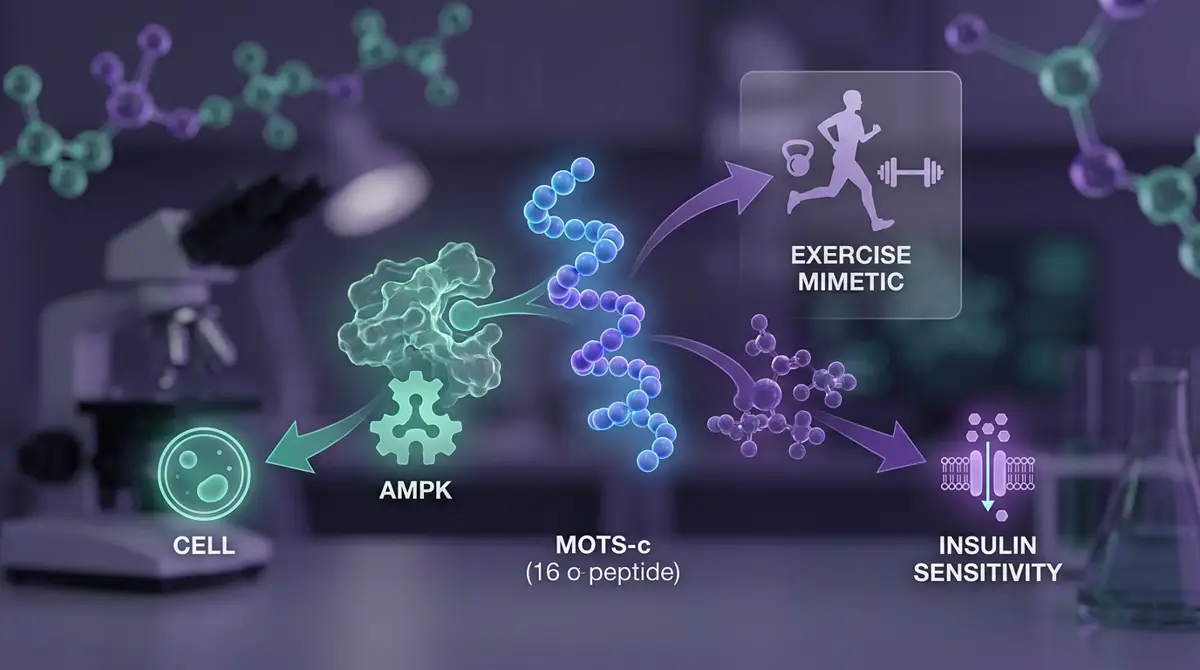
MOTS-c: The Mitochondrial-Derived Peptide in Metabolic and Longevity Research
How the 16-amino-acid mitochondrial peptide MOTS-c is used in AMPK, insulin-sensitivity and exercise-mimetic research.
Explore this research topic
Peptide research worldwide
How peptide research is regulated and discussed in each region we cover.
- United Kingdom
- United States
- Spain
- Ireland
- Germany
- France
- Italy
- Netherlands
- Belgium
- Canada
- Australia
- New Zealand
- United Arab Emirates
- Singapore
- Alabama, United States
- Alaska, United States
- Arizona, United States
- Arkansas, United States
- California, United States
- Colorado, United States
- Connecticut, United States
- Delaware, United States
- Florida, United States
- Georgia, United States
- Hawaii, United States
- Idaho, United States
- Illinois, United States
- Indiana, United States
- Iowa, United States
- Kansas, United States
- Kentucky, United States
- Louisiana, United States
- Maine, United States
- Maryland, United States
- Massachusetts, United States
- Michigan, United States
- Minnesota, United States
- Mississippi, United States
- Missouri, United States
- Montana, United States
- Nebraska, United States
- Nevada, United States
- New Hampshire, United States
- New Jersey, United States
- New Mexico, United States
- New York, United States
- North Carolina, United States
- North Dakota, United States
- Ohio, United States
- Oklahoma, United States
- Oregon, United States
- Pennsylvania, United States
- Rhode Island, United States
- South Carolina, United States
- South Dakota, United States
- Tennessee, United States
- Texas, United States
- Utah, United States
- Vermont, United States
- Virginia, United States
- Washington, United States
- West Virginia, United States
- Wisconsin, United States
- Wyoming, United States