
Regenerative Research
Optimizing Research: A Comprehensive Peptide Storage Guide for GHK-Cu, BPC-157, and TB-500
·Educational reference
Peptide research, particularly in the domain of regenerative science, relies heavily on the integrity and stability of the peptides under investigation. For compounds like GHK-Cu, BPC-157, and TB-500, which are extensively studied for their roles in tissue repair and regeneration, precise and consistent peptide storage practices are paramount. This comprehensive peptide storage guide will delve into the critical considerations for handling these specific peptides, ensuring their structural and functional attributes are preserved from synthesis to experimental application. Understanding the nuances of temperature, light, moisture, and reconstitution methods is not merely a logistical detail but a foundational element of sound scientific inquiry. The stability of a peptide directly impacts the reproducibility and validity of research findings, making proper peptide storage an indispensable aspect of laboratory protocols.
What are GHK-Cu, BPC-157, and TB-500?
**GHK-Cu (Glycyl-L-Histidyl-L-Lysine-Copper(II))** is a naturally occurring human tripeptide that binds with copper ions. First isolated from human plasma, it has been a subject of extensive research for its potential involvement in wound healing, tissue regeneration, anti-inflammatory processes, and antioxidant activity. Its proposed mechanisms often involve modulating gene expression related to tissue remodeling and repair.
**BPC-157 (Body Protection Compound-157)** is a synthetic gastric pentadecapeptide, a partial sequence of human gastric juice protein BPC. It has garnered significant attention in research for its purported regenerative and protective effects across various organ systems, including the gastrointestinal tract, musculoskeletal system, and nervous system. Studies suggest its mechanisms may involve promoting angiogenesis, modulating growth factor expression (e.g., VEGF), and exhibiting anti-inflammatory properties.
**TB-500 (Thymosin Beta-4)** is a synthetic variant of the naturally occurring protein Thymosin Beta-4. This protein is found in nearly all human and animal cells and plays a critical role in cell migration, actin polymerization, and tissue repair. TB-500, as a research peptide, has been investigated for its potential in wound healing, muscle repair, hair growth, and cardioprotection, often through its involvement in actin dynamics and cellular plasticity.
These three peptides, while distinct in their origins and primary molecular targets, share a common thread in their research applications: the exploration of their regenerative potential. For each, maintaining purity and activity through diligent peptide storage is non-negotiable for reliable experimental outcomes.
Mechanism of Action and Relevance to Stability
The efficacy of GHK-Cu, BPC-157, and TB-500 in *in vitro* and *in vivo* models is intrinsically linked to their structural integrity. Degradation of the peptide chain, oxidation of specific amino acid residues, or loss of secondary/tertiary structure can lead to reduced bioactivity or even the formation of inactive or harmful byproducts. Understanding their mechanisms helps highlight why stability is so crucial:
* **GHK-Cu**: Its copper-binding capability is central to its function. Degradation could lead to dissociation of copper or alteration of the binding site, reducing its catalytic or signaling roles. Its small size makes it relatively robust, but its active site remains vulnerable to chemical alteration. * **BPC-157**: This peptide's proposed stability in gastric acid environment *in vivo* suggests some inherent resilience. However, *in vitro* and *ex vivo* conditions introduce different degradation pathways, such as enzymatic degradation or hydrolysis. Its precise sequence and conformation are critical for interacting with proposed receptors or signaling pathways. * **TB-500**: As a larger peptide, TB-500's activity is highly dependent on its ability to interact with actin. Changes in its tertiary structure or fragmentation could significantly impair its actin-binding capacity, thereby negating its cellular migratory and regenerative effects.
For all these peptides, the specific amino acid sequence dictates their biological activity. Any alteration to this sequence, whether through hydrolysis, oxidation, or other chemical reactions, can render the peptide inert or change its properties unpredictably. This underscores the importance of a robust peptide storage guide to mitigate such degradation.
The Critical Role of a Proper Peptide Storage Guide
Maintaining the efficacy of research peptides begins with meticulous attention to storage. A comprehensive peptide storage guide ensures that the integrity of GHK-Cu, BPC-157, and TB-500 is preserved, directly impacting experimental reliability. Peptides are susceptible to various degradation pathways, including enzymatic hydrolysis, oxidation, deamidation, and aggregation. These processes can alter the peptide's primary, secondary, and tertiary structures, leading to loss of biological activity. Therefore, understanding and implementing correct peptide storage protocols is fundamental for any laboratory working with these valuable biomolecules.
General Peptide Storage Guide Principles
Regardless of the specific peptide, several overarching principles apply to effective peptide storage:
1. **Temperature Control**: Low temperatures significantly slow down chemical degradation reactions. For long-term storage, freezing is typically recommended. 2. **Moisture Exclusion**: Water facilitates hydrolysis, a primary degradation pathway for peptides. Anhydrous conditions are crucial. 3. **Light Protection**: UV light can induce photochemical degradation, especially in peptides containing aromatic amino acids or disulfide bonds. 4. **Oxygen Exclusion**: Oxygen can lead to oxidation of methionine, tryptophan, and cysteine residues, altering peptide structure and function. 5. **Sterility**: For peptides intended for *in vivo* research, maintaining sterility during handling and storage prevents microbial contamination that could degrade the peptide or interfere with experimental results.
Unreconstituted Peptide Storage
When received, peptides are typically in lyophilized (freeze-dried) powder form. This is the most stable state for long-term peptide storage due to the absence of water.
* **Temperature**: For GHK-Cu, BPC-157, and TB-500 in lyophilized form, storage at -20°C is generally sufficient for several months, and -80°C for extended periods (e.g., 1-2 years). Avoid frequent freeze-thaw cycles if the peptide is not aliquoted. * **Desiccation**: Always store lyophilized peptides with a desiccant (e.g., silica gel) to absorb any residual moisture or moisture that might ingress into the container. Store in a sealed, airtight container. * **Light Protection**: Keep vials in the dark or in amber vials to protect from light exposure. * **Packaging**: The original sealed vial, often under vacuum or inert gas (like argon), is ideal. Do not open the vial until immediately prior to reconstitution.
Reconstituted Peptide Storage Guide
Once reconstituted with a solvent, peptides become significantly less stable. The choice of solvent and storage conditions becomes even more critical.
* **Solvent Selection**: * **GHK-Cu**: Typically reconstituted in sterile distilled water or bacteriostatic water. Its copper complex is generally stable in aqueous solutions. * **BPC-157**: Commonly reconstituted in sterile bacteriostatic water (0.9% sodium chloride with 0.9% benzyl alcohol) for improved stability and antimicrobial properties. Sterile distilled water is also an option but offers less protection against microbial growth. * **TB-500**: Best reconstituted in sterile distilled water or bacteriostatic water. Avoid highly acidic or alkaline solutions unless specifically indicated for solubility, as these can accelerate hydrolysis. * **Concentration**: Reconstitute at a higher concentration if possible, as dilute solutions can sometimes be less stable due to adsorption to container walls or increased susceptibility to degradation. However, ensure the peptide remains soluble at the chosen concentration. * **Aliquotting**: This is perhaps the most crucial step for reconstituted peptides. Divide the reconstituted solution into small, single-use aliquots immediately after preparation. This prevents repeated warming and cooling, which can degrade peptides, and minimizes contamination risk. Store aliquots in sterile microcentrifuge tubes or cryovials. * **Temperature**: Reconstituted peptides are best stored at 4°C for short-term use (days to a few weeks). For longer-term storage (weeks to months), freeze aliquots at -20°C or -80°C. **Crucially, avoid repeated freeze-thaw cycles for any single aliquot.** Once thawed, an aliquot should be used within a short period (e.g., 24-72 hours) and then discarded if not fully utilized. * **pH Considerations**: Maintain a neutral or slightly acidic pH (e.g., pH 5-7) for most peptides, as extreme pH values can accelerate degradation. The buffering capacity of bacteriostatic water often helps in this regard. * **Container Material**: Use sterile, low-binding plastic (e.g., polypropylene) vials or tubes. Glass can sometimes adsorb peptides, especially at low concentrations, though this is less common for GHK-Cu, BPC-157, and TB-500 at typical research concentrations.
Practical Laboratory Considerations for Peptide Storage
Beyond the theoretical guidelines, practical application in the lab is key. This peptide storage guide highlights common pitfalls and best practices:
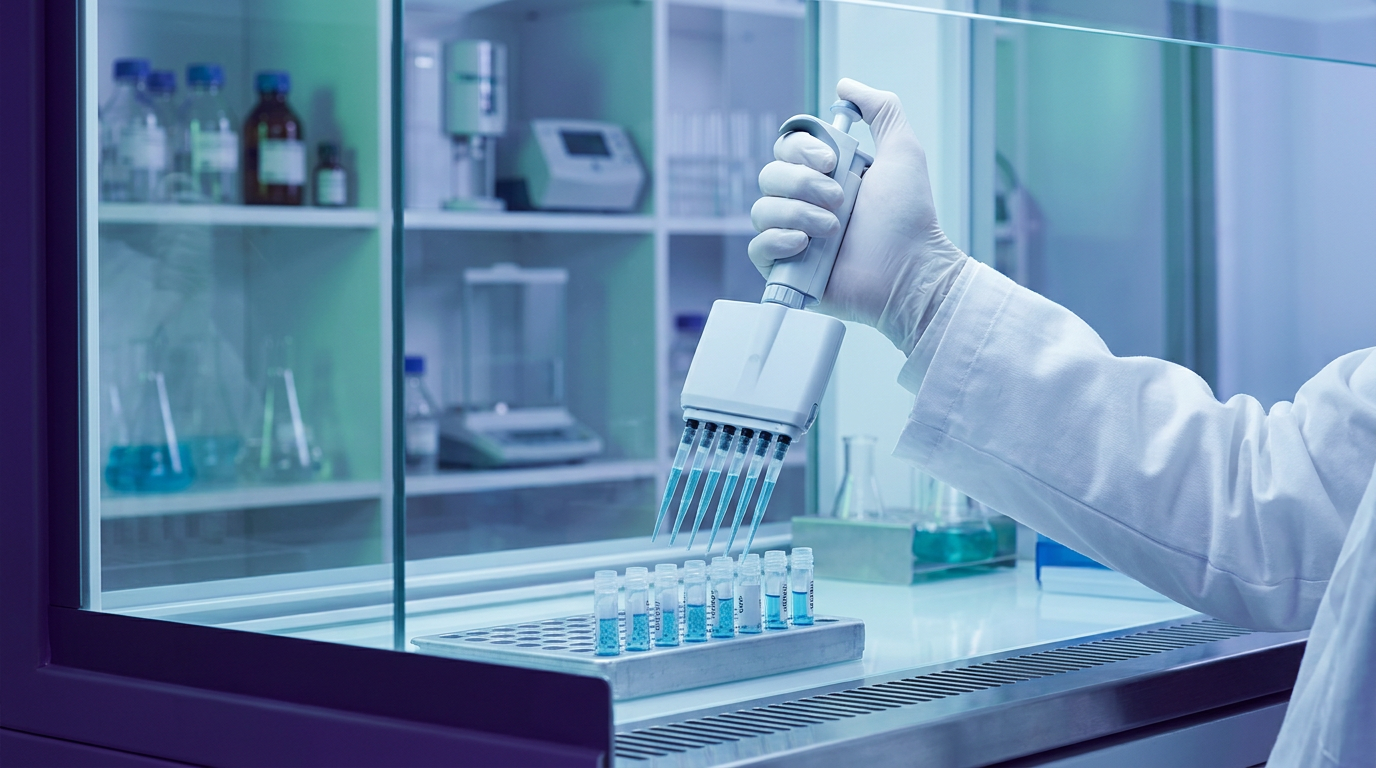
* **Labeling**: Clear, indelible labeling of vials is essential. Include peptide name, concentration, reconstitution date, solvent used, storage temperature, and researcher's initials. For aliquots, add the aliquot number. * **Handling**: Always use sterile techniques (e.g., working in a laminar flow hood, using sterile pipettes and tips) when reconstituting or aliquotting peptides. Wear appropriate PPE. * **Thawing**: Thaw aliquots rapidly at room temperature or in a 37°C water bath, then immediately place on ice. Avoid prolonged exposure to higher temperatures. * **Visual Inspection**: Before use, visually inspect reconstituted solutions for any signs of degradation, such as cloudiness, precipitation, or discoloration. While not definitive, these can be indicators of instability.
Research Evidence for Stability and Degradation
While specific, exhaustive stability studies for GHK-Cu, BPC-157, and TB-500 under all possible storage conditions are not always readily available in the public domain, general principles of peptide chemistry apply, and anecdotal laboratory experience informs many of the recommendations in this peptide storage guide. For example, some studies investigating BPC-157's *in vivo* effects often mention its administration over several days or weeks, implying a reasonable stability in solution under refrigerated conditions, often in bacteriostatic water (e.g., *Sikiric et al., 2004*). Similarly, research into TB-500's wound healing properties would necessitate stable solutions for repeated applications (*e.g., Malinda et al., 2007*). GHK-Cu, due to its copper-binding nature, is relatively stable in aqueous solutions, with some studies demonstrating its integrity over time when stored properly (*e.g., Pickart et al., 2012*).
However, it is also known that all peptides are prone to degradation over time. Factors such as residual moisture in lyophilized peptides, contaminants, incorrect pH, light exposure, and enzymatic activity (if not stored sterilely) can all contribute to reduced shelf-life. Analytical methods like High-Performance Liquid Chromatography (HPLC) and Mass Spectrometry (MS) are routinely used by manufacturers to assess peptide purity and stability. Researchers can perform similar analyses if questions about peptide integrity arise, particularly after prolonged storage or if experimental results become inconsistent.
Comparative Stability Notes
While all three peptides benefit from similar general peptide storage practices, there can be subtle differences in their inherent stability:
| Peptide | Molecular Size | Key Stability Concerns | Recommended Long-Term Unreconstituted Storage | Recommended Reconstituted Storage (Aliq.) | | :------ | :------------- | :------------------------------------------------------ | :-------------------------------------------- | :---------------------------------------- | | GHK-Cu | Tripeptide | Hydrolysis, copper chelation stability, oxidation | -20°C / -80°C, desiccation | -20°C / -80°C in sterile water/BW | | BPC-157 | Pentadecapeptide | Hydrolysis, enzymatic degradation, aggregation | -20°C / -80°C, desiccation | -20°C / -80°C in sterile BW | | TB-500 | 43 Amino Acids | Hydrolysis, aggregation, potential oxidative degradation | -20°C / -80°C, desiccation | -20°C / -80°C in sterile water/BW |
As seen, while sizes differ, the core peptide storage recommendations remain consistent for optimal preservation. The use of bacteriostatic water (BW) for reconstitution of BPC-157 is particularly emphasized due to its general use in *in vivo* research models.
Open Research Questions in Peptide Stability
Despite general guidelines, several areas pertaining to peptide stability warrant further detailed investigation:
* **Long-term Stability Studies**: Comprehensive, real-time stability studies for research peptides under various conditions (temperature, humidity, light, different solvents) are often proprietary to manufacturers. Publicly available data, especially for specific peptide batches over extended periods, could greatly benefit researchers. * **Impact of Excipients**: The role of various excipients (stabilizers, cryoprotectants) in lyophilized formulations for enhancing peptide stability and how they might affect subsequent reconstitution and use. This could improve peptide storage guidelines. * **Degradation Product Identification**: Detailed characterization of degradation products under suboptimal storage conditions could help in understanding potential experimental interference or altered biological effects. * **Container Interaction**: More research on peptide adsorption to different plastic and glass surfaces, particularly at very low concentrations, and methods to mitigate this (e.g., surface treatments or specific container types).
Risks and Evidence Gaps Related to Suboptimal Peptide Storage
Suboptimal peptide storage introduces significant risks to research integrity and resource allocation. The primary risk is the loss of peptide potency and activity, leading to unreliable or irreproducible experimental results. This can manifest as:
* **False Negatives**: The peptide may be active, but its degradation leads to a lack of observed effect, incorrectly concluding it has no biological activity. * **False Positives/Altered Effects**: Degradation products might exhibit different biological activities, or even toxicity, confusing experimental outcomes. * **Inconsistent Results**: Variability in peptide quality due to inconsistent peptide storage protocols can lead to day-to-day or batch-to-batch inconsistencies, making data interpretation challenging. * **Waste of Resources**: Degraded peptides mean wasted material, solvents, reagents, and most importantly, time and effort in conducting experiments that yield invalid data.
**Evidence Gaps**: A significant evidence gap exists in the form of standardized, universally accepted stability testing protocols for *all* research peptides, especially those not progressing to pharmaceutical development. While general guidelines exist, detailed, publicly accessible data on the exact shelf-life and degradation profiles of specific research-grade peptides under varied *in vitro* and *ex vivo* conditions are often limited. This means researchers often rely on manufacturer's recommendations and general peptide chemistry principles when developing their peptide storage guide, rather than peptide-specific, peer-reviewed stability studies.
Practical Laboratory Considerations for Implementing a Peptide Storage Guide
Implementing an effective peptide storage guide requires attention to detail and consistent adherence to best practices:
* **Dedicated Storage Areas**: Designate specific refrigerators and freezers for peptide storage, separate from other reagents if possible, to minimize cross-contamination risks and ensure stable temperatures. * **Temperature Monitoring**: Regularly monitor and log temperatures of storage units. Use alarm systems for temperature excursions. Calibrate thermometers periodically. * **Training**: Ensure all laboratory personnel handling peptides are thoroughly trained on the peptide storage guide, reconstitution protocols, and sterile techniques. * **SOP Development**: Establish clear Standard Operating Procedures (SOPs) for peptide reception, storage (both unreconstituted and reconstituted), aliquotting, and disposal. Include specific details for GHK-Cu, BPC-157, and TB-500. * **Inventory Management**: Maintain a detailed inventory system tracking peptide names, batch numbers, dates of receipt, reconstitution dates, aliquot concentrations, and location. This is crucial for tracing back any issues and implementing the peptide storage guide effectively. * **Quality Control**: Periodically, or if experimental issues arise, consider sending samples of stored peptides for analytical testing (HPLC-MS) to verify purity and integrity.
FAQ Section for Peptide Storage Guide
What is the ideal long-term peptide storage condition for lyophilized GHK-Cu?
Further reading on Peptide Intel Hub: verified research suppliers, how to read a certificate of analysis, every protocol from A to Z.