
Growth Hormone Research
Tesamorelin and GHRF Analogues: A Peptide Reconstitution Guide for Research
·Educational reference
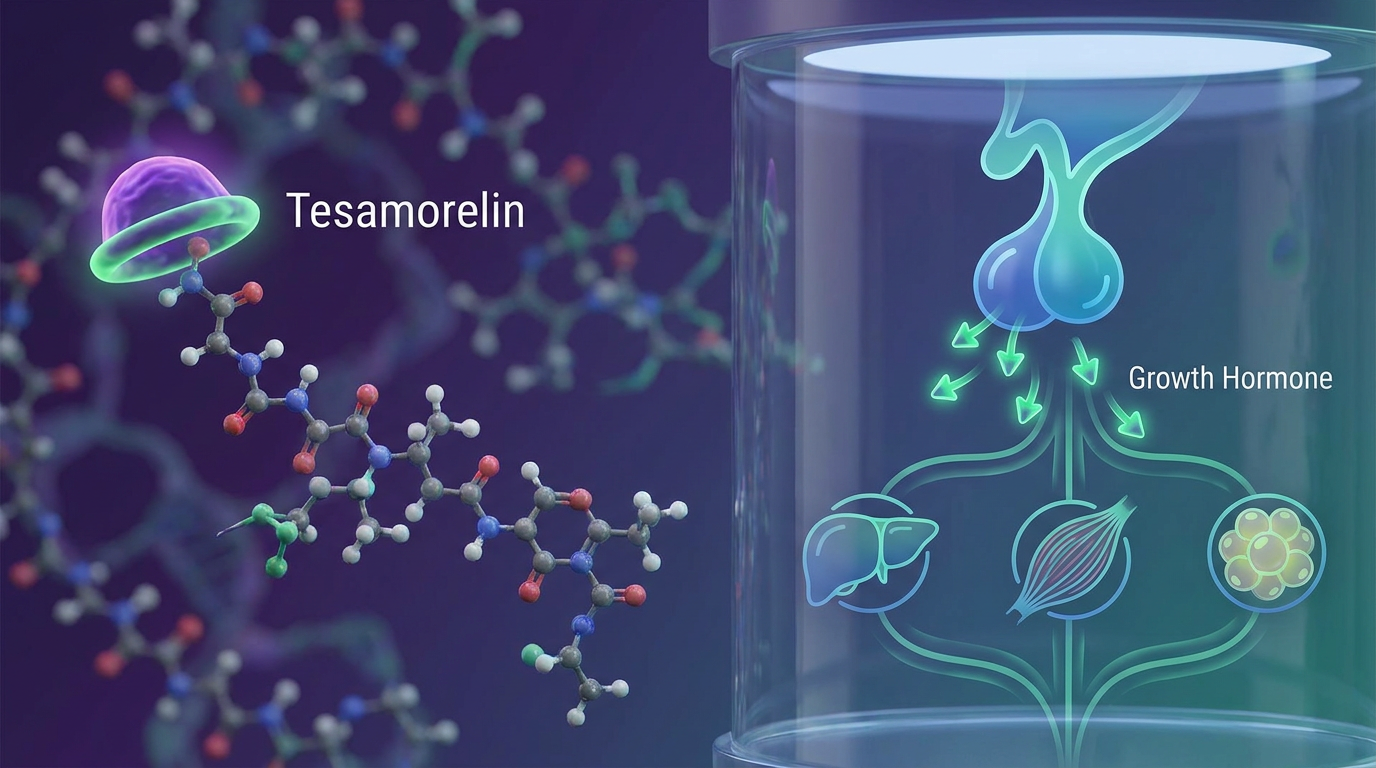
Tesamorelin is a synthetic analogue of Growth Hormone-Releasing Hormone (GHRH), a naturally occurring hypothalamic peptide that plays a crucial role in the regulation of growth hormone (GH) secretion from the anterior pituitary gland. Its primary action involves binding to and activating the GHRH receptor, thereby stimulating the pulsatile release of GH. This peptide has garnered significant attention in various research contexts due to its specific and potent effects on the somatotropic axis. Understanding the fundamental characteristics of Tesamorelin and other GHRF analogues is paramount for researchers aiming to conduct accurate and reproducible studies. A critical aspect of working with these peptides in a laboratory setting involves proper handling and preparation, particularly the process of peptide reconstitution, which ensures the stability and biological activity of the compound.
## What is Tesamorelin and its Research Scope?
Tesamorelin is a 44-amino acid peptide that mimics the activity of endogenous GHRH. Structurally, it is a modified version of human GHRH, featuring the addition of a *trans*-3-hexenoyl group to the N-terminus. This modification confers increased stability against enzymatic degradation, particularly by dipeptidyl peptidase-IV (DPP-IV), an enzyme that rapidly inactivates native GHRH. This enhanced stability translates to a prolonged half-life and sustained biological activity in research models, making Tesamorelin a valuable tool for investigating the chronic effects of GHRH receptor activation.
In research, Tesamorelin has been explored for its potential to modulate body composition, particularly adipose tissue distribution, and its effects on metabolic parameters. It operates by stimulating the pituitary gland to release GH, which in turn promotes lipolysis (fat breakdown) and influences protein synthesis. Research has also investigated its potential neurotrophic effects and its broader impact on endocrine function beyond GH regulation. The precise handling, storage, and dilution, often guided by a robust peptide reconstitution guide, are crucial for preserving the integrity and efficacy of this delicate molecule throughout experimental protocols.
## Mechanism of Action of GHRF Analogues
Growth Hormone-Releasing Factor (GHRF) analogues, including Tesamorelin, exert their primary biological effects by binding to the GHRH receptor (GHRHR). The GHRHR is a G protein-coupled receptor (GPCR) predominantly expressed on somatotroph cells within the anterior pituitary. Upon ligand binding, the GHRHR undergoes a conformational change, leading to the activation of intracellular signaling pathways, primarily involving adenylyl cyclase and the subsequent generation of cyclic adenosine monophosphate (cAMP).
This increase in intracellular cAMP levels activates protein kinase A (PKA), which phosphorylates various downstream targets. Key targets include transcription factors such as cAMP response element-binding protein (CREB), leading to increased transcription of genes involved in GH synthesis and secretion. The process culminates in the exocytosis of GH-containing vesicles from the somatotrophs into the systemic circulation. This pulsatile release pattern is characteristic of endogenous GH secretion and is mimicked by GHRF analogues, contributing to their physiological effects.
Beyond direct pituitary stimulation, some research suggests GHRH and its analogues may have extra-pituitary effects. GHRHRs have been identified in various tissues, including the brain, heart, pancreas, and immune cells, hinting at a broader biological role. However, the exact physiological significance of these extra-pituitary receptors and the extent to which GHRF analogues activate them remain areas of active investigation.
## What the Research Shows
Research into Tesamorelin and other GHRF analogues has spanned several decades, yielding valuable insights into their physiological impact. Studies have primarily focused on their ability to modulate GH secretion and its downstream metabolic consequences.
**Body Composition Modulation:**
* **Adipose Tissue:** Early research in animal models (e.g., mice, rats) in the late 1990s and early 2000s demonstrated that chronic administration of GHRH analogues could reduce visceral adipose tissue (VAT) accumulation without significantly impacting subcutaneous fat. Subsequent clinical research in specific populations has explored this effect, showing reductions in VAT, which is often associated with metabolic dysfunction. (e.g., *Stanley et al., 2004; Falutz et al., 2007*). * **Lean Body Mass:** While the primary focus has been on fat reduction, some studies have also indicated potential for modest increases in lean body mass or preservation of muscle mass in various research models when GH levels are elevated. (e.g., *Keller et al., 2006*).
**Metabolic Effects:**
* **Lipid Profiles:** Studies have reported that GHRF analogue administration can lead to improvements in lipid profiles, including reductions in triglycerides and total cholesterol, and increases in high-density lipoprotein (HDL) cholesterol, particularly in models exhibiting dyslipidemia. (e.g., *Dubé et al., 2011*). * **Glucose Metabolism:** The impact on glucose metabolism is complex. While GH itself can induce insulin resistance, long-term administration of GHRH analogues has been investigated for its net metabolic effects, which appear to vary depending on the model and specific conditions. Some research has observed improvements in insulin sensitivity in conjunction with VAT reduction, while other studies note potential for transient glucose elevation. (e.g., *Guaraldi et al., 2011*).
**Neurological and Cognitive Research:**
* GHRH receptors are present in the brain, leading to investigations into the neurotrophic and neuroprotective potential of GHRF analogues. Preclinical studies have explored their role in memory consolidation and neuronal survival in models of neurodegenerative conditions. (e.g., *Bocsi et al., 2008; Ren et al., 2010*).
**Cardiac Function:**
* Research in animal models has also explored the effects of GHRF analogues on cardiac function, with some studies suggesting potential for improved cardiac remodeling and function in specific pathological states, possibly through growth hormone-mediated pathways. (e.g., *Khan et al., 2007*).
These research avenues underscore the multifaceted potential of GHRF analogues, extending beyond simple GH stimulation, and highlight the importance of controlled experimental design and precise peptide handling, including a reliable peptide reconstitution guide.
## Comparisons with Other Growth Hormone Modulators
Tesamorelin and other GHRF analogues operate distinctly from other compounds that modulate the somatotropic axis. Understanding these differences is crucial for selecting appropriate research tools.
* **Direct Growth Hormone (GH) Administration:** Unlike direct GH administration, GHRF analogues stimulate the endogenous, pulsatile release of GH from the pituitary. This physiological pattern of release may offer different biological outcomes compared to constant exogenous GH levels, potentially reducing feedback inhibition or receptor desensitization in some research models. Direct GH administration bypasses the pituitary entirely. * **Growth Hormone Secretagogues (GHS):** GHS, such as ghrelin mimetics, stimulate GH release via a different receptor, the Growth Hormone Secretagogue Receptor (GHS-R), primarily acting on somatotrophs and hypothalamic neurons. While both GHRF analogues and GHS stimulate GH release, they do so through distinct mechanisms and may have different downstream effects on other hormonal axes (e.g., prolactin, ACTH) or metabolic pathways. * **Somatostatin Analogues:** Somatostatin is an inhibitory hormone that suppresses GH release. Analogues of somatostatin are used to reduce excessive GH secretion. GHRF analogues, conversely, work to enhance GH release, representing an opposing physiological mechanism.
| Feature | GHRF Analogues (e.g., Tesamorelin) | Direct GH Administration | GHS (e.g., Ghrelin mimetics) | | :-------------------- | :--------------------------------------- | :---------------------------------- | :-------------------------------------- | | **Mechanism** | Stimulates GHRHR on pituitary | Exogenous GH administration | Stimulates GHS-R on pituitary/hypoth. | | **GH Release Pattern** | Pulsatile, physiological | Constant (with sustained release) | Pulsatile, often more potent initial surge | | **Target Organ** | Pituitary | Target tissues directly | Pituitary, Hypothalamus | | **Feedback** | Subject to physiological feedback | Can suppress endogenous GH/GHRH | Can interact with GHRH/somatostatin |
This distinction is vital for researchers designing experiments aimed at specific mechanistic insights or physiological outcomes related to GH regulation. Careful consideration of these differences, alongside rigorous peptide reconstitution protocols, ensures the validity of experimental results.
## Open Research Questions
Despite considerable research, several key questions remain regarding Tesamorelin and other GHRF analogues:
* **Long-term Effects on Receptor Sensitivity:** What are the long-term consequences of chronic GHRHR activation on pituitary somatotroph sensitivity and overall somatotropic axis function in various models? Does sustained GHRH agonism lead to receptor desensitization or alterations in feedback loops? * **Extra-Pituitary Roles:** The precise physiological significance and downstream signaling pathways of GHRHRs expressed in peripheral tissues and the central nervous system are not fully elucidated. Further research is needed to understand the therapeutic potential of targeting these receptors directly. * **Combinatorial Therapies:** How do GHRF analogues interact with other metabolic modulators or growth factors? Could synergistic effects be achieved by co-administering GHRF analogues with other compounds, for instance, in models of metabolic dysfunction or tissue repair? * **Mechanism of Visceral Fat Reduction:** While GHRF analogues reduce visceral fat, the exact cellular and molecular mechanisms underlying this selective adipose tissue reduction remain an area of active investigation. Is it purely GH-mediated lipolysis, or are other local or systemic factors involved? * **Impact on Aging Models:** Given the decline in GH secretion with aging, further research is warranted to explore the effects of GHRF analogues in various models of aging, particularly concerning sarcopenia, cognitive decline, and metabolic health.
These questions highlight ongoing avenues for investigation, emphasizing the need for carefully designed studies and precise experimental techniques, where adherence to a peptide reconstitution guide is fundamental.
## Risks and Evidence Gaps in Research
While GHRF analogues have been extensively studied, researchers must consider potential risks and evidence gaps when designing new experiments.
**Potential Risks in Research Models:**
* **Glucose Dysregulation:** As GH can exert diabetogenic effects, chronic GHRF analogue administration might lead to glucose intolerance or insulin resistance in susceptible models. Close monitoring of glucose homeostasis is essential. * **Hypersensitivity Reactions:** Although rare, localized reactions at injection sites or systemic hypersensitivity responses could occur in certain animal models. * **IGF-1 Elevation:** Sustained GH stimulation invariably leads to elevated insulin-like growth factor-1 (IGF-1) levels. Supraphysiological IGF-1 levels have been linked to potential concerns in specific contexts, warranting careful dose-response studies and monitoring. * **Pituitary Adenoma Growth:** In models with pre-existing pituitary abnormalities, chronic GHRH stimulation could theoretically impact adenoma growth. This requires careful consideration in relevant research designs.
**Evidence Gaps:**
* **Long-term Safety Profiles:** While short-to-medium term studies exist, very long-term safety data in diverse research models, especially regarding oncogenesis or sustained endocrine alterations, is still developing. * **Optimal Dosing and Administration Regimens:** Establishing optimal dosing frequencies and administration routes to achieve specific physiological outcomes without undue adverse effects remains an area requiring further investigation across different species and disease models. * **Genotype-Specific Responses:** The response to GHRF analogues may vary based on genetic background or specific disease models. More research is needed to understand these inter-individual variabilities in research populations.
Researchers should meticulously review existing literature, conduct pilot studies, and establish clear endpoints to mitigate these potential risks and address existing evidence gaps in their experimental designs. Adherence to a robust peptide reconstitution guide is foundational to the reliability of such studies.
## Practical Laboratory Considerations: A Peptide Reconstitution Guide
Accurate and sterile peptide reconstitution is paramount for ensuring the stability, purity, and biological activity of Tesamorelin and other GHRF analogues. Improper handling can lead to degradation, aggregation, or contamination, invalidating research results.
### General Principles for Peptide Reconstitution
1. **Aseptic Technique:** Always work in a sterile environment (e.g., laminar flow hood) using sterile reagents, vials, syringes, and needles to prevent microbial contamination. 2. **Storage of Lyophilized Peptide:** Peptides are typically supplied as lyophilized (freeze-dried) powders. Store them according to manufacturer recommendations, usually at -20°C or -80°C, in a desiccated environment to prevent moisture absorption. 3. **Temperature Equilibration:** Before opening the vial, allow the lyophilized peptide to reach room temperature. This prevents condensation from forming on the peptide powder, which can degrade it.
### Reconstitution Steps for Tesamorelin and GHRF Analogues
Follow these steps carefully for reliable peptide reconstitution:
1. **Gather Materials:** * Lyophilized peptide vial (e.g., Tesamorelin) * Sterile bacteriostatic water (BW) or sterile 0.9% sodium chloride (saline) as per peptide specifications. Bacteriostatic water is generally preferred for peptides stored for longer periods, as benzyl alcohol acts as a preservative. * Sterile syringes (e.g., insulin syringes for small volumes) * Sterile needles * Sterile vials for aliquoting (optional, but recommended) * Alcohol wipes * Personal protective equipment (gloves, lab coat)
2. **Calculate Reconstitution Volume:** Determine the desired concentration for your stock solution. For example, if you have 2 mg of Tesamorelin and want a 1 mg/mL solution, you would add 2 mL of solvent.
* *Example Calculation: To reconstitute 5mg Tesamorelin to 2mg/mL:* * Desired concentration: 2 mg/mL * Peptide amount: 5 mg * Volume needed = Peptide amount / Desired concentration = 5 mg / 2 mg/mL = 2.5 mL
3. **Prepare the Solvent:** Swab the rubber stopper of the bacteriostatic water (or saline) vial with an alcohol wipe and allow it to air dry.
4. **Draw Solvent:** Using a sterile syringe, draw up the calculated volume of bacteriostatic water. Avoid introducing air bubbles into the syringe.
5. **Reconstitute Peptide:** * Swab the rubber stopper of the lyophilized peptide vial with an alcohol wipe and allow it to air dry. * Carefully and slowly inject the bacteriostatic water down the side of the peptide vial, allowing it to gently run onto the powder. **Do not inject directly onto the powder, as this can cause frothing and denaturation.** * Once the solvent is added, gently swirl the vial. **Do not shake vigorously**, as agitation can damage the peptide structure. Allow the peptide to dissolve completely, which may take several minutes. Ensure no visible particulate matter remains.
6. **Aliquoting (Optional but Recommended):** To minimize freeze-thaw cycles and preserve peptide integrity, it is highly recommended to aliquot the reconstituted solution into smaller, sterile vials or tubes. This way, only the required amount is thawed for each experiment.
7. **Storage of Reconstituted Peptide:** Store reconstituted peptide solutions at 4°C for short-term use (typically up to 2-3 weeks) or at -20°C to -80°C for longer-term storage (up to several months), especially if aliquoted. Avoid repeated freeze-thaw cycles.
**Table: Common Solvents for Peptide Reconstitution**
| Solvent Type | Primary Use Case | Notes | | :--------------------------------- | :-------------------------------------------------- | :----------------------------------------------------------------- | | **Bacteriostatic Water (BW)** | Most common for injectable research peptides | Contains 0.9% benzyl alcohol as a preservative; pH ~5.5. | | **Sterile Saline (0.9% NaCl)** | For peptides intolerant to benzyl alcohol; short-term use | No preservative; neutral pH. | | **Sterile Water (WFI)** | For peptides requiring strictly aqueous, non-saline solutions | No preservative; very short-term stability. | | **Dilute Acetic Acid (0.1-1%)** | For highly basic peptides with poor aqueous solubility | Can impact pH; requires careful consideration for biological assays. | | **Dilute Ammonium Hydroxide** | For highly acidic peptides | Less common; requires careful pH control. |